
You can make good sugar-free jam at home with two reliable methods: chia seeds for a quick fridge jam, or a “no-sugar-needed” pectin for a classic spread. What you can’t do is take a regular jam recipe and cut the sugar. In a traditional jam, sugar helps the jam set and helps preserve it, so removing it leaves you with a runny, short-lived fruit sauce. Below you’ll find both methods, the label rules that decide what “sugar free” really means, and storage guidance that keeps your jars safe.
TL;DR
Chia seed jam is the fastest route: fruit, chia seeds and lemon juice, ready in about 15 minutes of work plus chilling. Keep it in the fridge or freezer.
For a shelf-stable jar, use a pectin made for low or no sugar and follow the recipe printed in the box. Never simply reduce the sugar in an ordinary recipe.
On a store label, “sugar free” means less than 0.5 grams of sugars per serving, while “no sugar added” does not mean the fruit has no sugar.
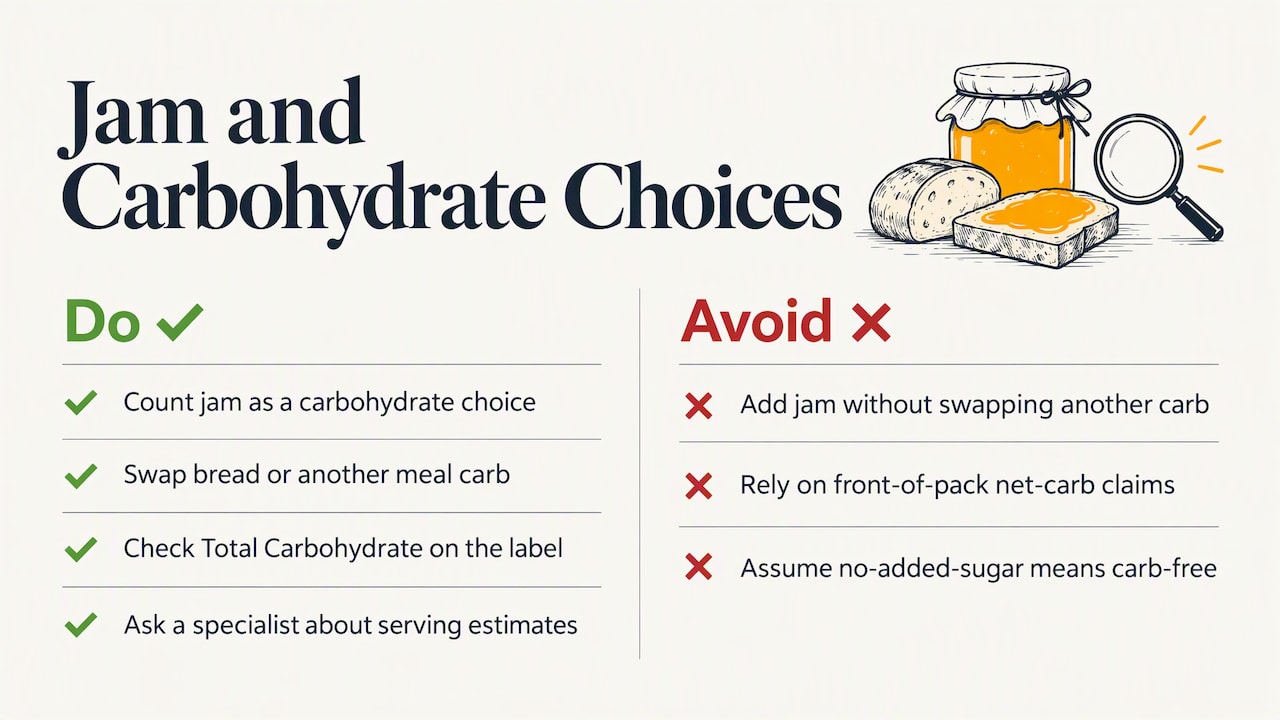
If you manage diabetes, count jam as a carbohydrate choice and check the Total Carbohydrate line, not the front of the jar.
Table of Contents
What “sugar free” actually means on a jar
The phrase is regulated in the US. Under FDA guidance on sugar-free claims, a food can carry “sugar free” only when it has less than 0.5 grams of sugars per labeled serving. If the product isn’t also low or reduced in calories, it needs a statement such as “not a reduced calorie food.”
Three labels look similar but mean different things:
| Label | What it tells you |
|---|---|
| Sugar free | Less than 0.5 g of sugars per serving |
| Reduced sugar | At least 25% less sugar than the regular version |
| No sugar added | No sugar or sugar-containing ingredient was added during processing |
That last one matters for fruit spreads. Fruit contains its own sugars, so a “no sugar added” jam made from strawberries still has sugar. It just didn’t come from the sugar bowl.
It also helps to know that many commercial sugar-free spreads swap sugar for sweeteners or sugar alcohols. Those can lower calories and blood sugar impact, but they can change the texture and still contribute to total carbohydrates, as the American Diabetes Association explains in its label-reading guide.
When we say “sugar-free jam” at home, we usually mean one of two things: no added sugar of any kind, or no added sugar plus a small amount of a sweetener. Both are fine. Just be honest with yourself about which one you’re making, especially when you cook for someone who counts carbohydrates.
Why you can’t just leave the sugar out
This is the mistake behind most failed batches. In a traditional jam, sugar does several jobs at once. According to the National Center for Home Food Preservation, sugar is a preserving agent and part of the structure that makes the gel. Standard pectin sets through a reaction between sugar, acid and pectin. Remove the sugar and that reaction doesn’t happen.
The Ask Extension guidance on reducing sugar gives the same advice: use recipes specifically designed for lower sugar amounts, and don’t try to trim the sugar in a regular high-sugar recipe.
There’s also a safety angle. The University of Maine Cooperative Extension notes that cutting sugar without the right pectin gives you a syrupy product, and that heavily reduced sugar and acid in high-moisture spreads can create a friendlier environment for bacterial growth. The fix is a pectin labeled for low or no sugar, used exactly as its package directs.
So you have two sensible paths:
No cooking-to-set at all: let chia seeds gel the fruit, then keep the jam cold.
Specially formulated pectin: follow the package recipe, and you can process jars for the pantry.
Method 1: Chia seed jam (the quick one)
Chia seeds absorb liquid and form a gel, so they thicken fruit without sugar. This is the version most people want when they search for a sugar-free jam recipe, because it needs no special equipment.
Ingredients
2 cups chopped fresh or frozen strawberries (about 10 ounces)
2 tablespoons chia seeds
1 tablespoon lemon juice
Optional: 1 to 2 teaspoons vanilla extract, or a small amount of your preferred sweetener if the fruit is tart
Steps
Put the strawberries in a small saucepan over medium heat. Frozen fruit works well and releases juice quickly.
Cook for 8 to 10 minutes, stirring, until the fruit softens and the juices run.
Mash with a fork or potato masher. Leave it chunky or mash it smooth, whichever you prefer.
Take the pan off the heat and stir in the chia seeds and lemon juice.
Let it sit for 5 minutes, then pour into a clean glass jar.
Chill for at least 2 hours. It thickens as it cools.
Tips for a better set
Too loose? Stir in another teaspoon of chia seeds and chill again. Seeds need time to absorb liquid.
Too stiff? Whisk in a spoonful of water or fruit juice.
Too tart? Very ripe fruit is the best sweetener. If you add anything, add it a little at a time and taste.
Texture: The seeds stay visible. If that bothers you, grind the chia seeds first for a smoother, darker jam.
Because there’s no sugar to preserve it and no pectin-based canning formula behind it, treat this as a fridge or freezer jam. The NCHFP advises that reduced-sugar spreads made with non-standard thickeners should be kept refrigerated or frozen rather than shelf-stored. As a practical habit, we make small batches that we can finish within about a week, and freeze the rest in small jars, leaving a little headroom for expansion.
Flavor combinations that work
Blueberry and lemon zest: blueberries are naturally juicy and set well with chia.
Raspberry and vanilla: tart fruit, so it needs no sweetener for most people.
Peach and cinnamon: use ripe peaches and a pinch of cinnamon.
Mixed berry: a bag of frozen mixed berries is the easiest weeknight option.
Cherry and almond: a few drops of almond extract make cherries taste richer.
Method 2: Jam with no-sugar-needed pectin (the shelf-stable one)
If you want a spreadable, classic-texture jam, or want to give jars as gifts, a pectin made for low or no sugar is the right tool. These products use a different setting mechanism that doesn’t rely on sugar, which is why the University of Maine’s extension team stresses using a low or no-sugar-needed pectin and the recipe that comes with it. The pectin and recipe are formulated together for both set and safety.
What that means in your kitchen:
Buy the right box. Look for wording such as “low or no sugar needed” on the pectin package.
Follow the insert exactly. Fruit quantities, acid, and cooking times are part of the formula. Don’t improvise the amounts.
Use the processing time on the insert if you want to can the jam.
Choose your sweetener from the allowed list. The package will say what it supports.
Sucralose is a special case people ask about. The NCHFP says granular Splenda doesn’t provide preservative properties like sugar, so it can sweeten but it can’t protect the jar. That’s another reason to follow a tested recipe rather than inventing one.
Storing sugar-free jam safely
This is where homemade jam goes wrong most often, so it’s worth being strict.
| Type | Where to keep it |
|---|---|
| Chia seed jam | Refrigerator, or freezer in small jars |
| Gelatin- or gum-thickened spreads | Refrigerator or freezer |
| Jam made with no-sugar-needed pectin and processed in a boiling-water canner | Pantry until opened, then refrigerator |
| Anything that wasn’t processed | Refrigerator or freezer |
Two more rules from the NCHFP principles of home canning:
Don’t seal with paraffin wax. It’s no longer recommended. The safe options are sterile jars with self-sealing lids processed in a boiling-water canner, or simply storing the jam in the fridge or freezer.
Don’t scrape off mold and eat the rest. Modern research suggests mold toxins can be present in the jar even when visible mold sits only on top. If you see mold, discard the jar.
The Oregon State University Extension publication on preserving for special diets is also useful if you’re canning for someone on a restricted diet. It recommends that people on special diets consult their doctor or dietitian first.
Sugar-free jam and diabetes
A spread with no added sugar is not automatically free of carbohydrate. If you manage diabetes, treat jam as a carbohydrate choice. The ADA’s class materials on the Diabetes Plate Method suggest sweet foods can fit into the carbohydrate portion of your plate, which means swapping out another carb at that meal, such as the bread, rather than adding jam on top of it.
When buying jam, check the Total Carbohydrate line on the Nutrition Facts panel. It includes sugar, starch and fiber. Front-of-pack claims such as “net carbs” aren’t a substitute. For personal targets, such as how many carbohydrate servings fit your meals or how a sweetener affects your readings, ask your doctor, certified diabetes care and education specialist or registered dietitian. Homemade jam has no label, so it’s worth asking them how to estimate a serving.
How to choose a good store-bought jar
If you’d rather buy than make, here’s what we look at:
The ingredient list first. Short is better. Fruit should come first.
The Total Carbohydrate line, per serving.
The sweetener type. Some people are fine with sugar alcohols, others find they upset the stomach. Know your own tolerance.
The claim wording. “Sugar free” and “no sugar added” aren’t interchangeable, as the table above shows.
The serving size. A tablespoon is a typical jam serving, but check the label rather than guessing.
Nutrition experts note that sugar-free doesn’t mean calorie-free or automatically healthy, as the NCHFP’s reduced-sugar spread guidance points out in discussing sweeteners and texture. Ingredient quality still counts.
Ways to use sugar-free jam beyond toast
A jar of homemade jam gets used up faster than you’d think when it’s versatile:
Smoothies: a spoonful of berry chia jam adds body and flavor to a yogurt-based smoothie.
Oatmeal and yogurt: swirl it in instead of flavored, sweetened yogurt.
Thumbprint cookies and bars: it works as a filling, though soft chia jam spreads more than cooked jam.
Kids’ snacks: spread thinly on whole-grain toast or stir into plain yogurt for a lunchbox cup.
Pancakes and waffles: warm it gently and use it as a topping.
Our perspective: simple fruit, honest labels
At Boost Eat, we build recipes around wholesome ingredients and around the diets people actually live with: vegan, gluten-free, low-calorie and sugar-free. Jam is a good test of that approach, because the temptation is to chase a perfect shortcut.
Our view is that the best sugar-free jam is the one you’ll make again. That’s usually the chia version: a handful of ingredients, one pan, a jar in the fridge. We like it because you can see what’s in it, and because it scales down to a single jar for one family. We’d rather you make a small batch and use it within the week than attempt a risky shelf-stable experiment.
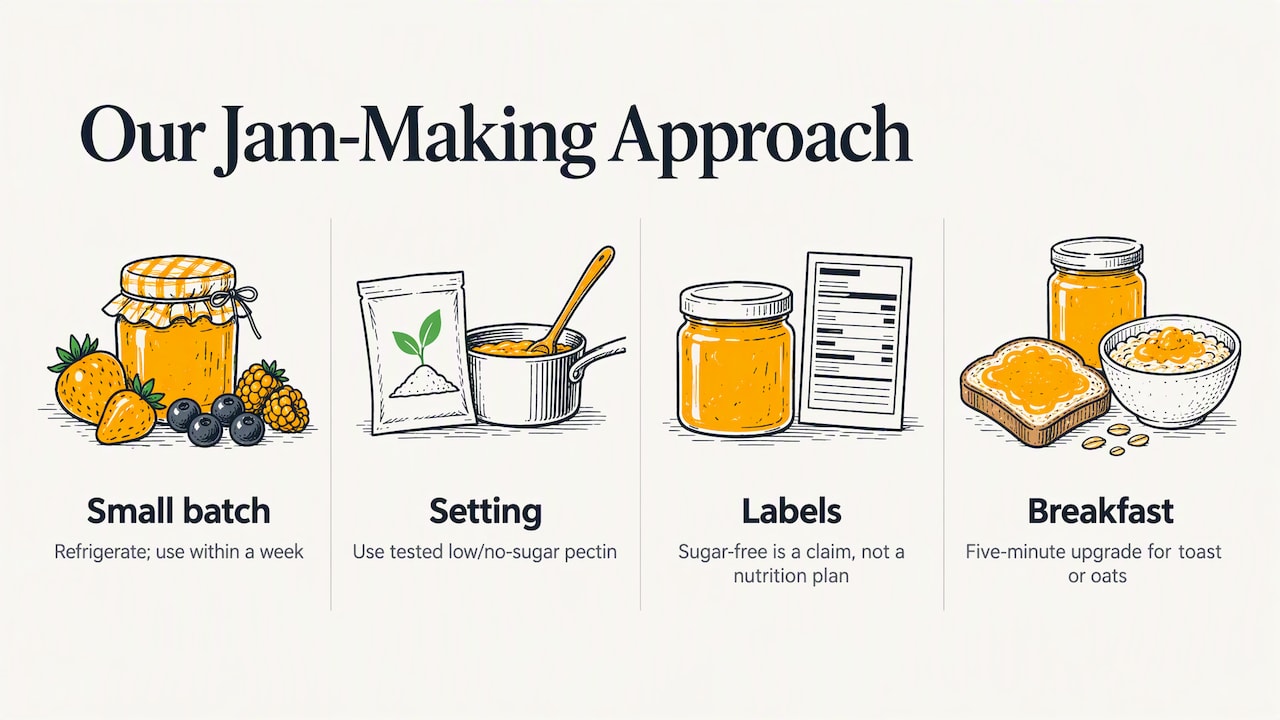
When shelf life matters, we point you to tested methods rather than clever tricks. Sugar does real work in jam, so replacing it takes the right pectin, not guesswork. And we always suggest reading the whole label. “Sugar free” is a claim, not a nutrition plan.
For parents, the appeal is simple: fruit, a thickener and lemon, and you decide how sweet it gets. For busy professionals, it’s a five-minute breakfast upgrade on toast or oats.
– Simos Boost-Eat.com Founder
Get more sugar-free ideas from Boost Eat
If you like this kind of simple, wholesome cooking, browse the recipes on the Boost Eat homepage for smoothies, healthy snacks, desserts and homemade baby food. If you’d like to be part of the community behind them, the Boost Eat Community plan is 7 USD per month.
FAQ
What jams are good for diabetics?
No jam is a free pass, because fruit still contributes carbohydrate. Choose spreads with a short ingredient list and check the Total Carbohydrate line on the label, then count it as a carbohydrate choice in your meal. Your doctor or dietitian can tell you what portion fits your plan.
Is sugar free 100% sugar free?
Not quite. The FDA allows “sugar free” on foods with less than 0.5 grams of sugars per labeled serving. That’s very little, but it isn’t zero. “No sugar added” is a looser claim, and fruit-based spreads still contain the fruit’s natural sugars.
Can I make jam without sugar and without pectin?
Yes, with chia seeds. They gel the cooked fruit as it chills, giving you a spreadable fridge jam with no sugar and no pectin. It won’t be shelf-stable, so keep it refrigerated or frozen.
Can I just use less sugar in my regular jam recipe?
No. Extension specialists advise against simply reducing the sugar in a standard recipe, because the set and the safety both depend on it. Use a recipe designed for low or no sugar, with the pectin it calls for.
How long does homemade sugar-free jam last?
It depends on the method. Chia jam and other unprocessed spreads belong in the fridge, and we recommend finishing them within about a week or freezing them in small jars. Jam made with no-sugar-needed pectin and properly processed can be stored in the pantry until opened, then refrigerated.
Sources
American Diabetes Association: Diabetes Plate Method participant guide
University of Maine Cooperative Extension: How to Make Low-Sugar Strawberry Jam
DISCLAIMER:
General Entertainment & Information Purposes Only
At Boost-Eat.com and our partners we share content for general entertainment and information. It’s not medical, dermatological, nutritional, or fitness advice and shouldn’t replace guidance from a licensed professional. If you’re making health-related decisions, please check with a qualified expert — and know that using this site and its information is at your own discretion.

