
A good vegetable smoothie starts with mild vegetables such as spinach, cucumber, cauliflower or zucchini. Add a creamy base, a little fruit for sweetness and enough liquid to blend smoothly. Most people find a ratio of about two parts vegetables to one part fruit tastes sweet enough without turning into a dessert. Below you will find the vegetables that work best, a simple formula you can adapt, five recipes, and the two situations (warfarin and dental extractions) where a few details matter.
Key takeaways
- Start with spinach, cucumber, frozen cauliflower or zucchini. They blend smoothly and barely change the flavor.
- Keep the whole vegetable in the glass. Blending keeps the fiber that juicing removes.
- Use fruit as a seasoning, not the main ingredient, to keep sugar in check.
- If you take warfarin, you do not have to give up greens, but your intake should stay steady from day to day.
- After a tooth extraction, a smoothie can be a good soft food, but drink it from a glass or spoon it, not through a straw.
Table of Contents
- Why vegetable smoothies are worth making
- Which vegetables blend best
- A simple formula for any vegetable smoothie
- Five vegetable smoothie recipes to try
- Making it easier on busy days
- Our perspective
- Want more ideas every week?
- Two situations that need a little care
- FAQ
- Sources
Why vegetable smoothies are worth making
Most of us fall short on vegetables, and a smoothie is one of the fastest ways to close the gap. The Cleveland Clinic describes smoothies as a convenient way to reach the recommended daily servings of vegetables. It also notes that adding vegetables to a fruit base raises nutrient density without a dramatic change in taste.
For scale, MyPlate guidance puts adult vegetable needs at roughly 2 to 3 cups a day depending on age and sex. It counts 2 cups of raw leafy greens as 1 cup from the vegetable group. A big handful or two of spinach in your blender is therefore a real contribution, not a token one.
There are three practical benefits:
- Fiber stays in. A smoothie uses the whole vegetable, so you get the complete fiber content. UMass Chan Medical School’s nutrition team points out that this is the key advantage over juicing. Fiber supports digestion, blood sugar regulation and fullness.
- It is fast. Five minutes, one blender, one glass. That suits busy mornings and after-school snacks alike.
- You can lower the sugar over time. The Cleveland Clinic’s guidance notes that smoothies are a chance to cut back on sweetness. Use lower-sugar vegetables, limit high-sugar fruit and let your palate adjust.
Which vegetables blend best
Not every vegetable belongs in a blender. The best ones are either very mild or soften into something creamy. Here is how the common choices behave.
| Vegetable | Flavor in a smoothie | Best use | Tip |
|---|---|---|---|
| Baby spinach | Almost neutral | Everyday green base | Start with one big handful per serving |
| Cucumber | Fresh, light | Refreshing, watery blends | Peel if your blender is not powerful |
| Frozen cauliflower | Neutral, creamy | Thick, milkshake-style texture | Use steamed then frozen florets for the smoothest result |
| Zucchini | Very mild | Thickening without taste | Peel if you want a perfectly smooth finish |
| Kale | Earthy, slightly bitter | Nutrient-dense green boost | Remove thick stems, pair with pineapple or apple |
| Carrot | Naturally sweet | Orange smoothies with mango or orange | Use a high-speed blender or grate first |
| Beet (cooked) | Sweet, earthy | Deep red color and flavor | Start with a small piece; it is strong |
| Celery | Salty, grassy | Savory-leaning green blends | Pair with apple and lemon |
| Avocado | Buttery | Creaminess and healthy fat | Half is plenty |
| Fresh ginger | Warm, spicy | Flavor lift | A thumb-sized slice goes a long way |
For beginners, spinach, cucumber and carrot are the easiest trio. Once those feel familiar, move on to kale, beet and celery.
Vegetables to treat with care
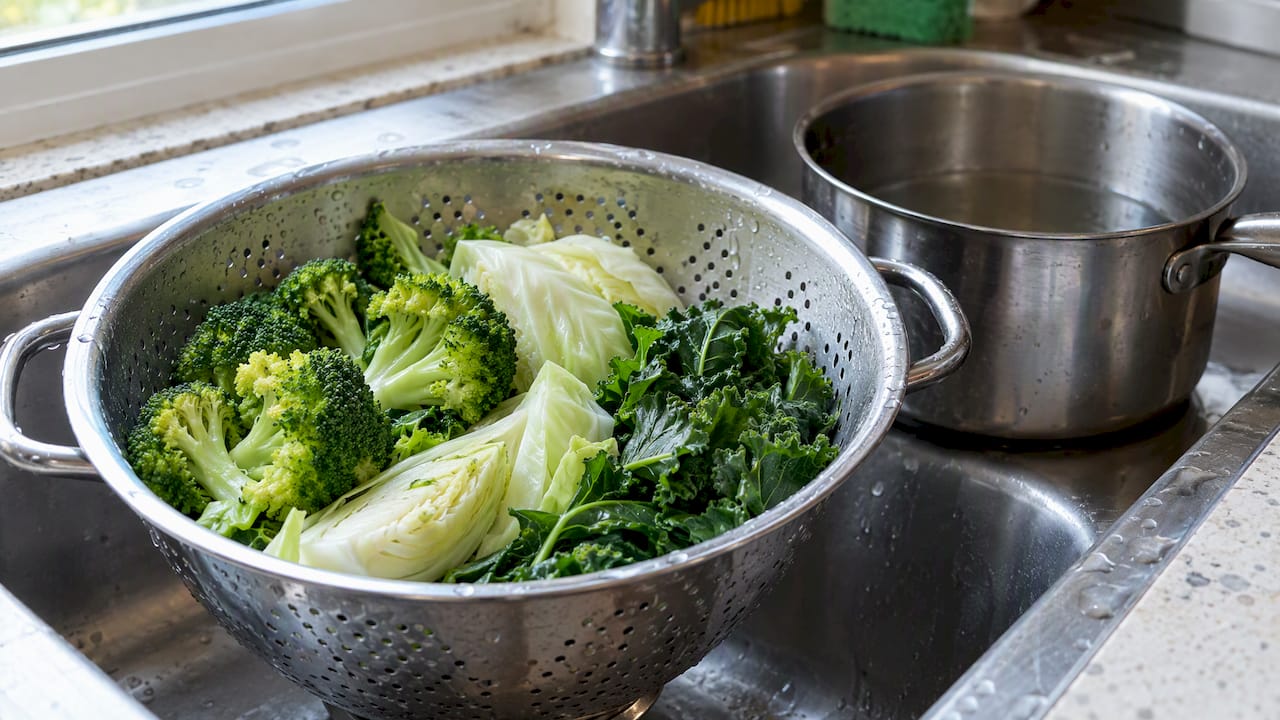
Raw broccoli, cabbage and large amounts of raw kale can taste harsh and sit heavily for some people. If you have a sensitive stomach, steam and cool them first, or use smaller amounts. The UMass nutrition team notes that blending breaks fibers down mechanically, which can make them easier on some digestive systems. Your own tolerance is still the real test.
A simple formula for any vegetable smoothie
Once you know the pattern, you do not need a recipe each time. Use this build:
- Liquid, 1 cup. Water, unsweetened almond milk, oat milk, or coconut water. Pour it in first so the blades catch easily.
- Vegetables, 1 to 2 cups. Raw leafy greens pack down, so a loosely packed 2 cups of spinach is fine.
- Fruit, ½ to 1 cup. Frozen fruit makes it cold and thick. Banana, mango, pineapple, apple, pear and berries all work.
- Creamy element, optional. Greek yogurt, half an avocado, a spoonful of nut butter or frozen cauliflower.
- Boosters, optional. Chia seeds, ground flaxseed, hemp seeds, protein powder, lemon juice, fresh mint or ginger.
Blend on high for 45 to 60 seconds. If it is too thick, add liquid a splash at a time. If it tastes flat, a squeeze of lemon or lime usually fixes it faster than more fruit.
Keeping the sugar low
Fruit is where the sugar adds up. A banana, a cup of mango and a splash of juice can turn a green smoothie into a sweet drink. To stay in control:
- Skip fruit juice as the liquid.
- Use berries, green apple or half a banana instead of large portions of tropical fruit.
- Let spices such as cinnamon, vanilla and ginger carry some of the sweetness.
- Gradually reduce the fruit by a few tablespoons each week.
We publish many sugar-free ideas for families. Our sugar-free jam guide shows the same approach: chia seeds and smart fruit choices can replace added sugar.
Five vegetable smoothie recipes to try
Each recipe makes one large or two small servings.
1. Beginner green smoothie
- 2 cups baby spinach
- ½ cucumber, peeled
- 1 green apple, cored
- ½ frozen banana
- 1 cup cold water or unsweetened almond milk
- Juice of ½ lemon
Blend until smooth. The apple and banana sweeten it, and the spinach is nearly invisible in taste.
2. Creamy cauliflower and berry
- ¾ cup frozen cauliflower florets
- 1 cup frozen mixed berries
- ½ cup plain Greek yogurt
- ¾ cup milk of your choice
- 1 teaspoon chia seeds
The cauliflower gives body without a vegetable flavor. This one is a good first step for children who are wary of anything green.
3. Carrot, mango and ginger
- 1 medium carrot, chopped small
- ¾ cup frozen mango
- 1 thin slice fresh ginger
- 1 cup orange juice diluted with ½ cup water, or just 1½ cups water
- Squeeze of lime
Bright and sweet, and a good option if you are not ready for green drinks. Use water instead of juice for a lower-sugar version.
4. Beet and cherry
- 1 small cooked beet, cooled
- 1 cup frozen dark cherries
- ½ cup plain yogurt or coconut yogurt
- 1 cup unsweetened almond milk
- A few mint leaves
Deep red and rich. Start with a small beet, because the flavor is assertive.
5. Savory-leaning celery and avocado
- 2 celery stalks
- ½ avocado
- 1 cup spinach
- ½ green apple
- 1 cup cold water
- Lemon juice and a pinch of salt
Creamy, cool and barely sweet. It suits anyone trying to move away from sugary smoothies.
Making it easier on busy days
The real obstacle is rarely the recipe, it is prep. A few habits help:
- Freeze smoothie packs. Portion spinach, cauliflower and fruit into bags on Sunday. In the morning, tip one into the blender and add liquid.
- Keep frozen vegetables on hand. Frozen spinach and cauliflower are ready to use, keep for months and blend very smoothly.
- Wash greens once. Dry them well and store in a container lined with a paper towel.
When fresh produce runs out, a plant-based greens blend is one convenient way to add more vegetables to everyday meals. It works best as a backup to the real thing.
Our perspective
At Boost Eat we think the best smoothie is the one you will make again tomorrow. That is why we lean on wholesome, familiar ingredients and short steps instead of long ingredient lists. We write for people with real constraints: vegan, gluten-free, low-calorie and sugar-free diets, parents making snacks for children, and professionals with ten minutes before work.
Our advice for vegetable smoothies is simple. Begin with a ratio you enjoy, even if it is mostly fruit. Then shift toward vegetables a spoonful at a time. Taste buds adapt faster than most people expect, and a smoothie that you enjoy beats a virtuous one that you pour down the sink. Treat a smoothie as one part of your day alongside whole meals, not as a replacement for eating vegetables in other forms.
— Simos
Want more ideas every week?
If you like having a steady stream of tested, simple recipes, our Member’s Kitchen is for you. It costs €7 per month or €70 per year. For free recipes, browse everything on the Boost Eat homepage, from smoothies and snacks to salads and Greek-inspired dishes. Our Greek yogurt dessert ideas are a natural next stop, since the same yogurt works in your blender.
Two situations that need a little care
For most healthy adults a vegetable smoothie needs no special precautions. Two situations are worth knowing about.
If you take warfarin
Leafy greens such as kale, spinach and collards are rich in vitamin K, which can reduce the effect of warfarin. The StatPearls review of warfarin explains that foods and drinks can raise or lower its anticoagulant effect and that patients should receive dietary education. The goal is not to avoid greens but to keep your intake consistent. A daily green smoothie with a similar amount of greens is easier to manage than a huge kale smoothie once a week.
Talk to your prescriber, anticoagulation clinic or pharmacist before you start a daily green smoothie habit. They can adjust monitoring if your intake changes.
After a tooth extraction
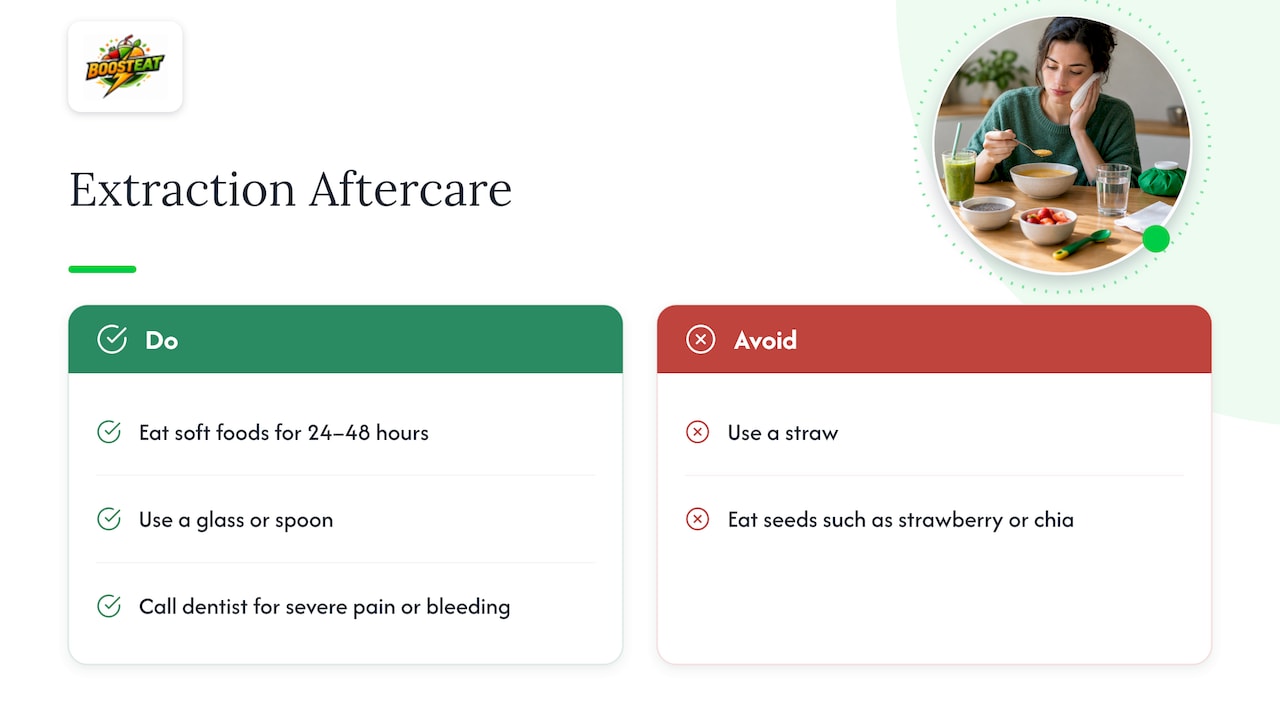
Smoothies are a popular soft-food option after dental surgery, especially for children. Hospital guidance says to eat only soft foods for the first 24 to 48 hours, and to make sure food and drinks are not too hot while you are still numb. Your dentist may recommend a longer soft-food period depending on the procedure.
The key detail is the straw. Suction can dislodge the blood clot in the socket. The Oxford Health NHS leaflet on mouth care after extraction covers this aftercare. Drink from a glass or use a spoon, keep the smoothie cool or lukewarm rather than icy or hot, and skip seeds such as strawberry or chia that can lodge in the wound. If you have severe pain or bleeding, call your dentist or the surgery that treated you.
FAQ
What vegetables are good in a smoothie?
Spinach, cucumber, cauliflower, zucchini, carrot, celery and cooked beet are all reliable choices. Spinach and cucumber are the mildest. Kale and beet have stronger flavors, so add them once you are used to green drinks.
What should you not mix in a smoothie?
There is no dangerous combination for most people, but some mixes simply taste bad or cause trouble. Large amounts of raw cruciferous vegetables such as cabbage can taste harsh and upset some stomachs. Pairing fruit juice with several sweet fruits makes the sugar add up fast. If you take warfarin, avoid sudden big changes in how much leafy green you blend.
Is it good to drink a vegetable smoothie every day?
For most healthy people, yes, as long as it adds to a varied diet rather than replacing it. Watch the fruit and juice so the sugar stays moderate, and rotate your vegetables for variety. People on warfarin should keep the greens consistent and check with their care team.
Are vegetable smoothies better than juice?
Generally, yes, because blending keeps the whole vegetable and all of its fiber. Juicing removes most of it, which is what supports fullness and blood sugar regulation. That is the main point made by the UMass nutrition team.
Sources
- How to Make Healthy and Delicious Smoothies, Cleveland Clinic
- MyPlate: The Vegetable Group, New Mexico State University
- Veggie Smoothies, UMass Chan Medical School
- Warfarin, StatPearls, NCBI Bookshelf
- Aftercare instructions for dental extractions, University Hospitals Dorset NHS
- Looking after your mouth after a dental extraction, Oxford Health NHS
Recommended
- Delicious Greek Yogurt Dessert Ideas You Can Whip Up Fast
- Make Sugar-Free Jam: Easy Chia Seed & Pectin Methods
General Entertainment & Information Purposes Only. At Boost-Eat.com and our partners we share content for general entertainment and information. It’s not medical, dermatological, nutritional, or fitness advice and shouldn’t replace guidance from a licensed professional. If you’re making health-related decisions, please check with a qualified expert — and know that using this site and its information is at your own discretion.
Discover more from BOOST EAT
Subscribe to get the latest posts sent to your email.

