
The best Greek yogurt desserts start with a tub of plain yogurt, a little sweetness you control and something to give it texture. Layer it into a parfait, spread it thin and freeze it into bark, whip it into chocolate mousse or fold it into no-bake cheesecake cups. Most of these take 10 to 15 minutes of hands-on time and need no oven.
Below you will find nine ideas with ratios you can scale, the sugar math that decides whether a “healthy” dessert really is one, and fixes for the problems that trip people up: runny mousse, icy frozen yogurt and a layer of liquid on top of the tub.
TL;DR
Buy plain Greek yogurt and sweeten it yourself. Flavored tubs can carry 10 to 20 grams of sugar per serving, which can wipe out the point of a healthy dessert.
Greek yogurt has roughly double the protein of regular yogurt, so a small bowl feels more filling than a typical sweet snack.
A good starting ratio for most no-bake desserts: 1 cup plain Greek yogurt, 1 to 2 teaspoons of honey or maple syrup, and a flavor (vanilla, cocoa, citrus zest or cinnamon).
Frozen bark, parfaits and mousse all work well for families, and each can be made vegan-friendly or lower in sugar with simple swaps.
Table of Contents
Why Greek yogurt works so well in desserts
Straining removes whey, and that is what gives Greek yogurt its thick, spoonable body. The result stands in well for higher-fat dairy such as heavy cream or sour cream in recipes, with a more protein-rich profile and less of the heavy calorie load. That thickness is also why it holds a swirl, sets in the freezer and carries cocoa or fruit puree without turning watery.
The nutrition side is just as useful. According to Harvard Health, a serving of plain nonfat Greek yogurt delivers about 9 to 18 grams of protein for around 95 to 100 calories, depending on the product. Protein slows you down at the end of a meal. A dietitian quoted by Cleveland Clinic calls plain nonfat Greek yogurt the gold standard for weight management because its protein promotes longer-lasting fullness, as described in their yogurt guide.
The catch is sugar. The same guide warns that some flavored yogurts, even ones made with real fruit, can be more like junk food in disguise. The American Heart Association limit it cites is no more than 25 grams of added sugar a day for women and 36 grams for men. One flavored cup can eat most of that before you add a single topping.
How to build a healthy Greek yogurt dessert
Think of every dessert here as four decisions.
The base. Plain Greek yogurt. Nonfat is leanest and tangiest, 2% is a good all-purpose middle, and whole milk gives the creamiest mousse and the softest frozen texture.
The sweetener. Start small: 1 teaspoon of honey or maple syrup per 1/2 cup of yogurt, then taste. Ripe banana or mashed berries add sweetness along with fiber. A registered dietitian quoted by Real Simple recommends buying plain yogurt and customizing the sweetness at home, using fresh berries, nuts, seeds, cinnamon and a minimal drizzle of honey.
The flavor. Vanilla extract, cocoa powder, lemon or orange zest, cinnamon, instant espresso, peanut butter powder.
The crunch. Chopped nuts, seeds, toasted coconut, crushed freeze-dried fruit or a spoonful of granola. Contrast is what makes yogurt feel like dessert instead of breakfast.
One more caution from the same research: experts warn against swapping sugar for artificial sweeteners in desserts, because these can set up taste buds to crave high-sugar foods later in the day. Fruit, a little honey and warm spices keep things simple.
Nine Greek yogurt dessert ideas
1. The classic Greek yogurt parfait
A parfait is just layers, which makes it the easiest dessert to scale for a crowd or for kids who like to assemble their own.
1 cup plain Greek yogurt
1 tablespoon honey or maple syrup, stirred in
1 cup mixed berries
1/4 cup crunchy topping such as granola, toasted oats or chopped nuts
Spoon half the yogurt into a glass, add half the berries, repeat, then finish with the crunch. Add the granola just before serving or it goes soft. Tested recipes from the professional test kitchen world follow the same pattern, for example this yogurt and berry parfait built on plain Greek yogurt, honey and mixed berries.
For a dessert version, swap the granola for crushed dark chocolate and add a pinch of cinnamon to the yogurt. For a gluten-free version, use certified gluten-free oats or nuts.
2. Frozen Greek yogurt bark
Bark is the answer when someone asks for a frozen dessert and you have no ice cream machine.
1 1/2 cups plain Greek yogurt (whole milk freezes least icy)
2 tablespoons maple syrup
1 teaspoon vanilla extract
Toppings: berries, chopped pistachios, a few dark chocolate chips, a pinch of flaky salt
Line a rimmed baking sheet with parchment. Stir the yogurt, syrup and vanilla together and spread it about 1/4 inch thick. Scatter the toppings and press them in lightly so they stick. Freeze until completely firm, usually a few hours, then break into shards and store in a sealed container in the freezer.
Let the pieces sit for a couple of minutes before eating. Straight from the freezer they are hard enough to be unpleasant, and slightly softened they taste much creamier. They also melt fast, so serve a few at a time.
3. Frozen yogurt bites for small hands
These suit toddlers and school-age kids, and they are a sugar-free option when you skip the sweetener.
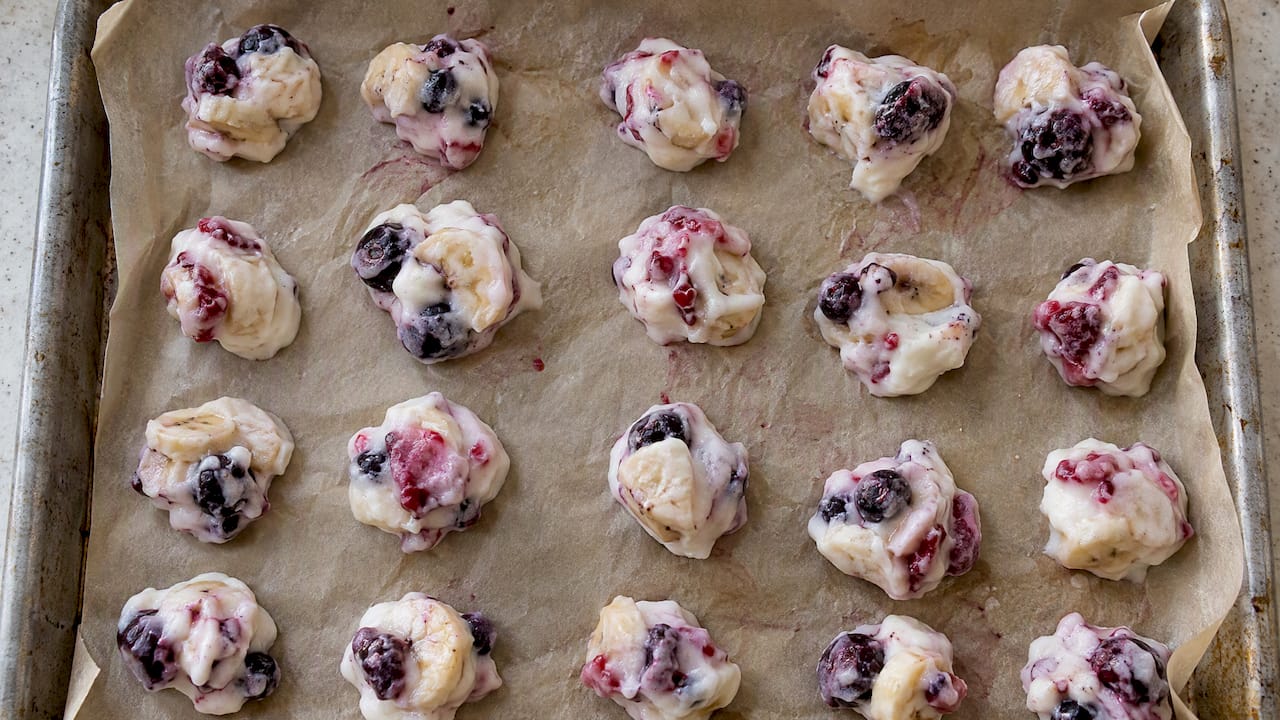
Stir 1 cup of plain Greek yogurt with 1/2 cup mashed ripe banana or berry puree. Drop teaspoon-sized mounds on a parchment-lined tray, or pipe them from a zip-top bag with the corner snipped. Freeze until solid, then move them to a bag. With very young children, check with your pediatrician about when yogurt and any added fruit or nuts are appropriate, and serve the bites cut small or slightly thawed so they are easy to chew.
4. Two-ingredient chocolate mousse
This is the dessert people are most surprised by. A tangy base takes to chocolate very well.
1 cup thick plain Greek yogurt (2% or whole)
2 ounces dark chocolate, melted and cooled slightly
1 to 2 teaspoons maple syrup, to taste
Pinch of salt
Whisk the yogurt until smooth. Stir a spoonful into the warm chocolate first to loosen it, then fold the chocolate mixture back into the rest. Chill for at least 30 minutes. If you add the chocolate while it is hot, it can seize or thin out the yogurt, so let it cool until it is just warm. If you prefer a cocoa version without melting, whisk in 2 tablespoons of unsweetened cocoa powder and 1 tablespoon of maple syrup instead.
5. No-bake cheesecake cups
Greek yogurt brings the tang of cheesecake without cream cheese doing all the work.
Crust: 1/3 cup crushed graham crackers or gluten-free oat cookies mixed with 1 tablespoon melted butter or coconut oil
Filling: 1 cup plain Greek yogurt, 1/4 cup softened cream cheese (or a dairy-free alternative), 1 tablespoon honey, 1 teaspoon lemon zest, 1/2 teaspoon vanilla
Topping: macerated berries (berries tossed with a teaspoon of maple syrup and left 10 minutes)
Press the crumbs into two small jars or ramekins, whip the filling until smooth and spoon it over. Chill for an hour so it firms up. Using less cream cheese and more yogurt keeps the cups lighter, but a little cream cheese helps the filling hold its shape.
6. Fruit and yogurt popsicles
Blend 1 cup plain Greek yogurt with 1 1/2 cups ripe fruit (mango, strawberries or peaches) and a teaspoon of honey if the fruit is tart. Pour into molds and freeze overnight. University extension programs publish similar recipes: the University of Missouri’s yogurt recipe collection includes fruit yogurt popsicles and a raspberry fruit dip, both very easy to adapt.
7. Baked apples or roasted fruit with yogurt cream
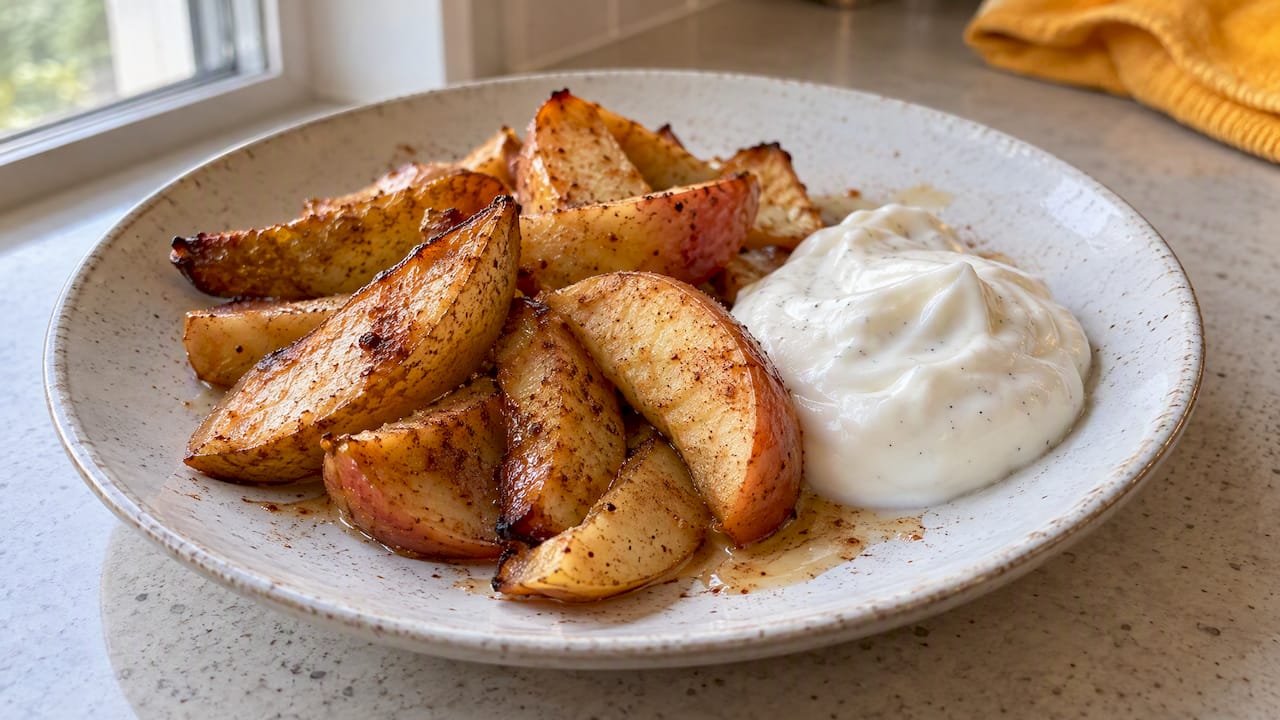
When the weather turns cool, warm fruit and cold yogurt is a great pairing. Roast sliced pears, apples or plums at 400°F for 20 to 25 minutes with cinnamon and a teaspoon of maple syrup. Serve with a dollop of yogurt stirred with vanilla and a few walnuts. The only sugar is what the fruit and a small drizzle supply.
8. Yogurt dip for fruit
A dessert does not have to be a bowl. Mix 1 cup of plain Greek yogurt with 1 tablespoon of peanut butter, 1 teaspoon of honey and a pinch of cinnamon. Serve with apple slices, strawberries or banana coins. It works as a lunchbox treat and as a party platter.
9. Smoothie-bowl sundae
Blend frozen banana, frozen berries and 1/2 cup Greek yogurt until very thick, then scoop into a bowl and top like a sundae. It is the bridge between smoothies and dessert, and a good way to use up fruit that is about to turn.
Quick comparison: which dessert fits your day
| Dessert | Hands-on time | Chill or freeze time | Best for |
|---|---|---|---|
| Parfait | 5 minutes | None | Breakfast or dessert, kids assembling their own |
| Frozen bark | 10 minutes | Several hours | Make-ahead, summer snack |
| Frozen yogurt bites | 10 minutes | Several hours | Toddlers, school snacks |
| Chocolate mousse | 10 minutes | 30 minutes | Chocolate cravings, dinner guests |
| Cheesecake cups | 15 minutes | 1 hour | Entertaining, portion control |
| Popsicles | 5 minutes | Overnight | Hot days, kids |
| Roasted fruit and yogurt cream | 5 minutes | 20 to 25 minutes in the oven | Cool weather |
| Fruit dip | 3 minutes | None | Parties, lunchboxes |
| Smoothie-bowl sundae | 5 minutes | None | Using up ripe fruit |
Making them fit your diet
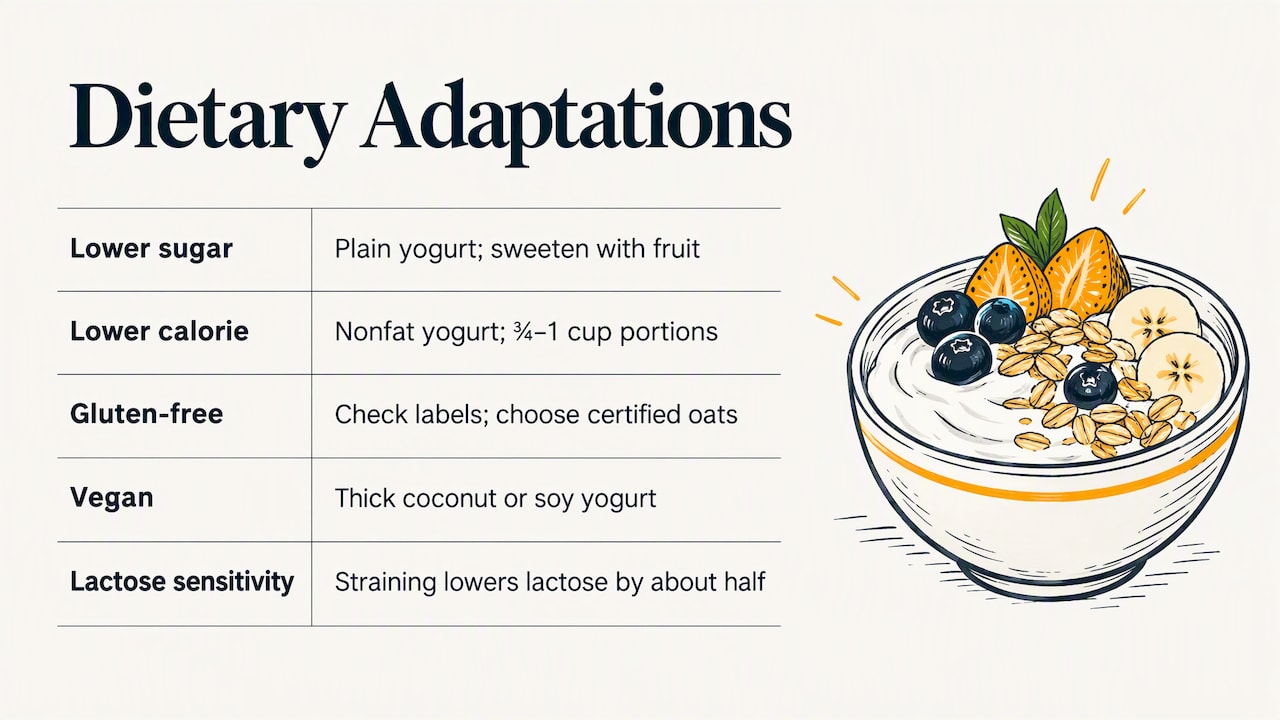
Lower sugar or sugar-free. Use plain yogurt, then let fruit do the sweetening. Mashed banana, grated apple, dates blended into a puree and ripe berries all add sweetness along with fiber. Start with less sweetener than you think you need, because the tang of yogurt mellows once it is chilled.
Lower calorie. Use nonfat yogurt, keep portions to about 3/4 to 1 cup, and put the richest ingredient (chocolate, nuts) in measured amounts rather than handfuls. Fruit-heavy layers add volume for few calories.
Gluten-free. Yogurt itself is naturally gluten-free, but check labels on granola, cookies and flavored products. Choose certified gluten-free oats if anyone at the table needs them.
Vegan. Greek yogurt is a dairy product, so a vegan version needs a thick plant-based yogurt such as coconut or soy. Because the protein and fat differ, results vary: mousse and parfaits translate well, while frozen bark can freeze harder, so let it sit a few minutes before serving. Harvard Health notes that nondairy versions and frozen treats have widely differing nutritional content, so read labels.
Lactose sensitivity. Straining removes whey, which lowers carbohydrate and lactose by about half compared with traditional yogurt, according to University of Missouri Extension. Greek yogurt is therefore often easier to tolerate for mild sensitivity. If you have a dairy allergy or diagnosed lactose intolerance, talk to your doctor or a registered dietitian before relying on it.
Fixes for the most common problems
There is liquid on top of the tub. That is whey, and it is normal. Stir it back in for a consistent texture. It only signals trouble if the liquid turns cloudy or yellow or smells off, as the Missouri Extension guidance explains. Mold means the tub goes in the trash.
The mousse is runny. Your yogurt may be a thinner, strained-less style, or the chocolate was too hot. Strain the yogurt for 30 minutes in a fine sieve lined with a coffee filter or cheesecloth, then try again with slightly cooled chocolate.
The frozen dessert is icy. Low-fat yogurt freezes into harder crystals. Use whole milk yogurt, add a little more sweetener or mashed banana (both lower the freezing point), and let it soften for a few minutes before serving.
The dessert is too tangy. Add a pinch of salt, a splash of vanilla or a spoonful of nut butter before adding more sugar. Fat and salt round out sourness better than sweetness alone.
The parfait gets soggy. Keep crunchy toppings separate until serving. For meal prep, layer yogurt and fruit in jars and carry the granola in a small container.
Our point of view: dessert should earn its place
We write for people who want food that is quick, wholesome and still enjoyable, and Greek yogurt desserts are the clearest example of that idea. The reader with ten minutes after dinner, the parent trying to cut back on sugar for the kids, the person managing weight without feeling deprived: they all need a dessert that satisfies without becoming a second meal of sugar.
Our advice comes down to three habits. First, buy plain. It is the single change that gives you control, and you can always add a drizzle of honey, but you can never take sugar out of a flavored cup. Second, treat fruit as the main sweetener and use syrup as a finishing touch. Third, use a format you will repeat. Parfaits and bark work because they take so little effort that they actually happen on a Tuesday night.
We also keep dietary needs in mind: sugar-free, gluten-free, vegan and low-calorie versions should be a normal part of a recipe, not an afterthought. A table with a food-allergic child, a dad watching calories and a teenager who just wants chocolate should still be able to share one dessert, and that is how we approach every recipe we write.
– BoostEat
Keep the recipes coming
If you want more ideas like these for breakfasts, snacks, smoothies and kid-friendly sweets, browse the full Boost Eat recipe collection. To support what we publish and join our readers, the Boost Eat Community is $7 per month. You can also read more about who we are and how we choose our recipes.
A word on daily yogurt and probiotics
Desserts like these can be part of a regular routine, so a realistic view of Greek yogurt helps. Registered dietitians quoted by Real Simple say eating it daily can support muscle, bone and gut health thanks to its protein, calcium, B vitamins and probiotics. The main downside they flag is added sugar in flavored products, not the yogurt itself.
On probiotics, keep expectations modest. Experts interviewed by Time say the effect is temporary and depends on your gut, and that it is more noticeable after a course of antibiotics than in people who are already healthy. If you are taking antibiotics or have a digestive condition, ask your doctor or dietitian what to eat, rather than relying on a dessert.
FAQ
Is there a downside to eating Greek yogurt every day?
For most people the main issue is added sugar in flavored varieties, which can contain 10 to 20 grams per serving, according to Cleveland Clinic. Choosing plain yogurt and sweetening it yourself avoids the problem. If you have a dairy allergy or diagnosed lactose intolerance, check with your doctor first.
What can I make with a lot of Greek yogurt?
Parfaits, frozen bark, mousse, cheesecake cups, popsicles and fruit dips all use a cup or two at a time. For a bigger batch, make the bark on a full baking sheet and freeze popsicles in a mold. Greek yogurt also goes into baked goods such as banana bread and coffee cake when you want a moist crumb.
What should I not pair with Greek yogurt?
Avoid piling on sweetened toppings such as candy, sweetened granola and flavored syrups, since they cancel out the benefit of choosing plain yogurt. Very acidic fruit can taste sharp against its tang, so balance it with a little honey or vanilla. If you use it in hot dishes, add it off the heat, because high heat can make it curdle.
Can I make Greek yogurt desserts ahead of time?
Yes. Mousse and cheesecake cups keep well covered in the refrigerator for a day or two, and frozen bark and bites keep in a sealed container in the freezer. Add crunchy toppings and fresh fruit at serving time. Always follow the use-by date on the tub and discard it if you see mold.

