Chia pudding is two ingredients and a little patience: chia seeds and milk, stirred together and chilled until the seeds swell into a soft, spoonable gel. The classic starting ratio is 2 tablespoons of whole chia seeds to ½ cup of milk, refrigerated for at least 3 hours, and Cleveland Clinic notes that overnight gives the best result. Below you will find the base method, the fixes for lumpy or runny batches, flavor ideas, vegan and sugar-free versions, a quick chia smoothie, and honest guidance on digestion.
Key Takeaways
Use 2 tablespoons of chia seeds per ½ cup of milk, stir well, and chill at least 3 hours, ideally overnight.
Stir again after the first few minutes so the seeds do not clump at the bottom of the jar.
Swap in plant milk for a vegan pudding, and sweeten with fruit or a small amount of maple syrup, or skip sweetener altogether.
Soaked chia is easier on digestion. Start with a small portion if you are new to chia and drink water through the day.
Chia also works in a smoothie: 1 tablespoon is enough to add fiber and body.
Table of Contents
How to Make Basic Chia Pudding
The base needs no cooking, no special equipment and about five minutes of hands-on time. This is the method we use for one serving.
Ingredients
2 tablespoons whole chia seeds
½ cup milk of your choice
Optional: a pinch of cinnamon, ¼ teaspoon vanilla, a teaspoon of sweetener
Steps
Add the chia seeds and milk to a jar or small bowl. Cleveland Clinic’s recipe uses exactly this proportion for a single serving.
Whisk or stir well, scraping the bottom, where seeds like to settle.
Wait five to ten minutes, then stir again. This second stir is the secret to a smooth pudding with no solid clumps.
Cover and refrigerate for at least 3 hours. Overnight is better.
Stir briefly before serving and add toppings.
That is the whole recipe. Everything else on this page is a variation on it.
Scaling the recipe
The ratio is easy to multiply. Four servings means ½ cup of chia seeds and 2 cups of milk, which fits comfortably in a quart jar. We like to make a batch on Sunday evening so breakfast is already sitting in the fridge for the first part of the week.
Why the fridge time matters
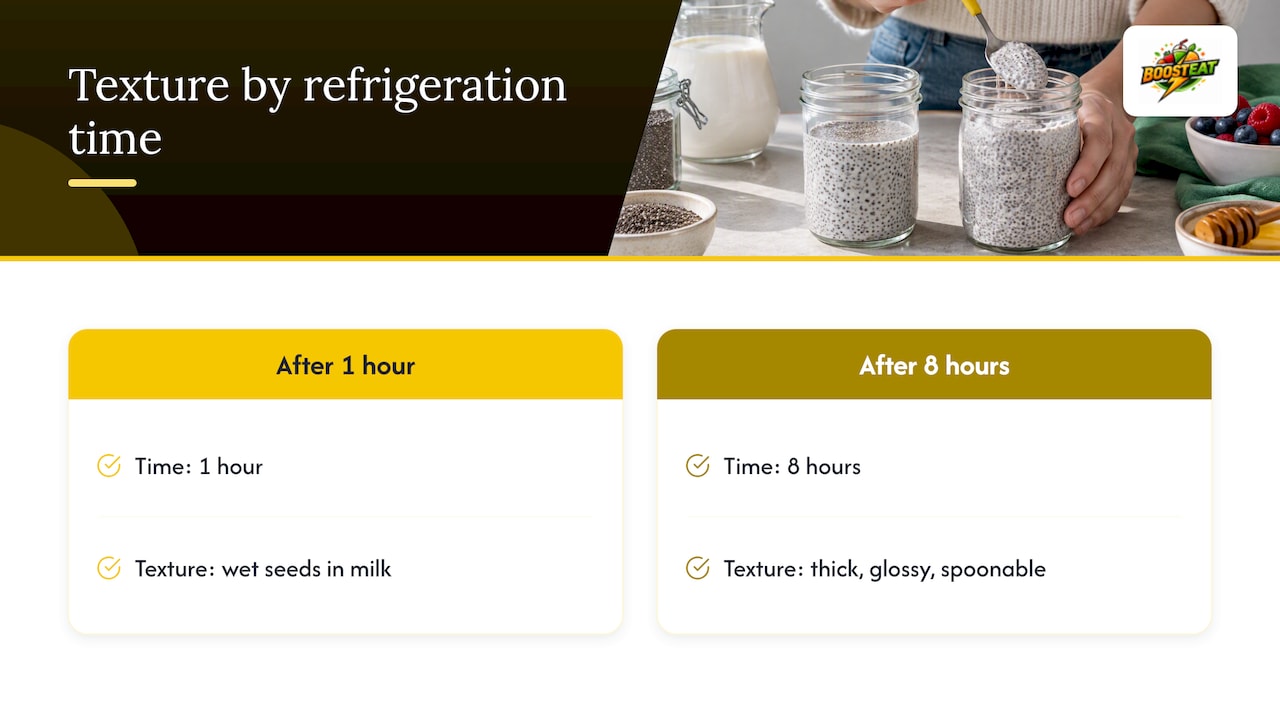
Chia seeds absorb liquid and form a gel around each seed. That takes time, and the cold slows the process enough that the texture sets evenly. A pudding eaten after one hour will often taste like wet seeds in milk. A pudding eaten after eight hours is thick, glossy and spoonable.
Overnight Chia Pudding: A Simple Routine
Overnight chia pudding is the version most people actually make, because it fits a busy schedule. The routine is:
Evening (5 minutes): Mix the seeds, milk and flavoring in a lidded jar. Shake or whisk. Stir again after a few minutes if you are still in the kitchen.
Overnight: Let the fridge do the work.
Morning (1 minute): Stir, add fruit, nuts or a spoonful of yogurt, and eat at home or take the jar with you.
A lidded jar is the best tool here. You can shake it to mix, store it upright, and carry it to work without transferring anything.
How long does chia pudding keep?
In a sealed jar or airtight container, prepared pudding keeps in the refrigerator for up to five days. It will thicken a little as it sits, so add a splash of milk before eating if it has become too firm. Keep toppings separate until serving so nuts and granola stay crunchy.
Fixing Common Chia Pudding Problems
Most disappointing batches come down to one of four issues.
| Problem | Likely cause | Fix |
|---|---|---|
| Lumps of seeds stuck together | Seeds were not stirred after the first few minutes | Stir vigorously, then chill again for another hour |
| Too runny | Not enough chilling time or too little chia | Chill longer, or stir in an extra teaspoon of chia and wait an hour |
| Too thick or gluey | Too much chia for the milk, or several days in the fridge | Stir in a splash of milk until it loosens |
| Bland | No salt, spice or acid | Add a pinch of cinnamon, a drop of vanilla or a squeeze of lemon |
The runny-batch fix works because the extra seeds absorb the surplus liquid. Add them, stir, and give it time rather than adding more and more.
Flavor Ideas That Work
Once you have the base, flavor is where it becomes your own. Whisk flavorings into the milk before the seeds go in so they spread evenly. Add soft toppings right before you eat.
Vanilla cinnamon: ¼ teaspoon vanilla and a pinch of cinnamon. The easiest starting point.
Chocolate: 1 teaspoon of unsweetened cocoa powder whisked into the milk, with sliced banana on top.
Berry: Mashed raspberries or blueberries stirred in, a few whole ones on top.
Tropical: Coconut milk as the liquid, with mango and a sprinkle of toasted coconut.
Peanut butter and banana: A spoonful of nut butter whisked into warm milk, then cooled slightly before the seeds go in.
Greek yogurt parfait: Layer the set pudding with plain Greek yogurt and fruit in a glass for a snack that feels like dessert.
Fresh berries, nuts, granola and nut butter all make good toppings, and adding them just before serving keeps the contrast between creamy and crunchy.
If you enjoy make-ahead breakfasts, our overnight oats guide uses the same jar-and-fridge routine, and you can stir a spoonful of chia into an oats jar to get the best of both.
Vegan, Dairy-Free and Sugar-Free Chia Pudding
Chia pudding adapts easily because the seeds do the thickening, not the milk. That is why it suits so many dietary needs.
Vegan and dairy-free
Use any plant-based milk: almond, oat, soy or coconut. Delish’s recipe confirms the pudding works with either dairy or plant-based milk, so you can choose by taste. Richer milks such as canned light coconut milk give a creamier pudding. Thinner milks give a lighter one. For sweetness, maple syrup or agave keep it fully plant-based, while honey is the option for those who are not vegan.
Gluten-free
Chia seeds and milk contain no gluten on their own. If you add granola or oats as a topping, choose versions labeled gluten-free.
Sugar-free
You do not need added sugar for a pudding people will enjoy. Try these:
Use unsweetened milk and mash half a ripe banana into the liquid.
Stir in unsweetened applesauce or pureed berries.
Lean on warm spices such as cinnamon, and on vanilla, which smells sweet even when it is not.
Top with fresh fruit rather than syrup or jam.
For families, this is a good dessert path for kids because the sweetness comes from fruit. If you want a sweet topping, our sugar-free jam with chia seeds and pectin is a spoonful away and uses the same gelling power of chia.
Breakfasts for steadier energy
Pairing chia with protein, such as Greek yogurt or a handful of nuts, makes a more filling start to the day. If you are planning your mornings around blood sugar, this guide to breakfast foods for steady blood sugar offers more ideas to rotate with your chia jars.
Is Chia Pudding Healthy?
In short, yes, as part of a varied diet. According to Harvard’s Nutrition Source, one ounce (28 grams) of chia seeds has about 140 calories, 4 grams of protein and 11 grams of fiber, and chia is the richest plant source of omega-3 fatty acids. The same page is careful to say that research has not shown a specific health benefit from chia seeds alone, but that they can contribute to disease prevention as part of a plant-rich diet.
What that means in practice:
Fiber: A serving of pudding can move you meaningfully toward daily fiber goals.
Plant omega-3s: Chia provides ALA, the plant form of omega-3.
Protein: Modest on its own, better with Greek yogurt or soy milk.
Your toppings matter: Sweetened milk, syrup and candied granola can turn a light breakfast into a dessert. Keep the base simple and let the fruit do the sweetening.
Think of chia pudding as a flexible, fiber-rich building block rather than a cure for anything.
Can Chia Pudding Upset Your Stomach?
Some readers feel bloated after chia, and the reason is simple: chia is very high in fiber, and a sudden jump in fiber can be uncomfortable. A few habits make a real difference.
Start small. If you are new to chia, begin with about 1 tablespoon per serving and work up.
Soak the seeds fully. Soaking forms a gel coating that helps make chia more digestible. A pudding that has chilled overnight is fully hydrated. A pudding with seeds that are still crunchy or dry in the center is not ready.
Drink water through the day. Fiber works best with enough fluid.
Do not eat dry seeds on their own. Soak them, or stir them into a moist food such as yogurt or a smoothie, rather than swallowing a spoonful dry and chasing it with water.
Soaking is not required to unlock the nutrients, as National Geographic explains, but it does make the seeds easier to digest and gives them the gelatinous texture that makes pudding work.
If you have irritable bowel syndrome, fiber can be a trigger. EatingWell advises people with IBS to work with a healthcare provider for individualized guidance, so check in with your doctor or a registered dietitian before making chia a daily habit.
How to Make a Chia Seed Smoothie
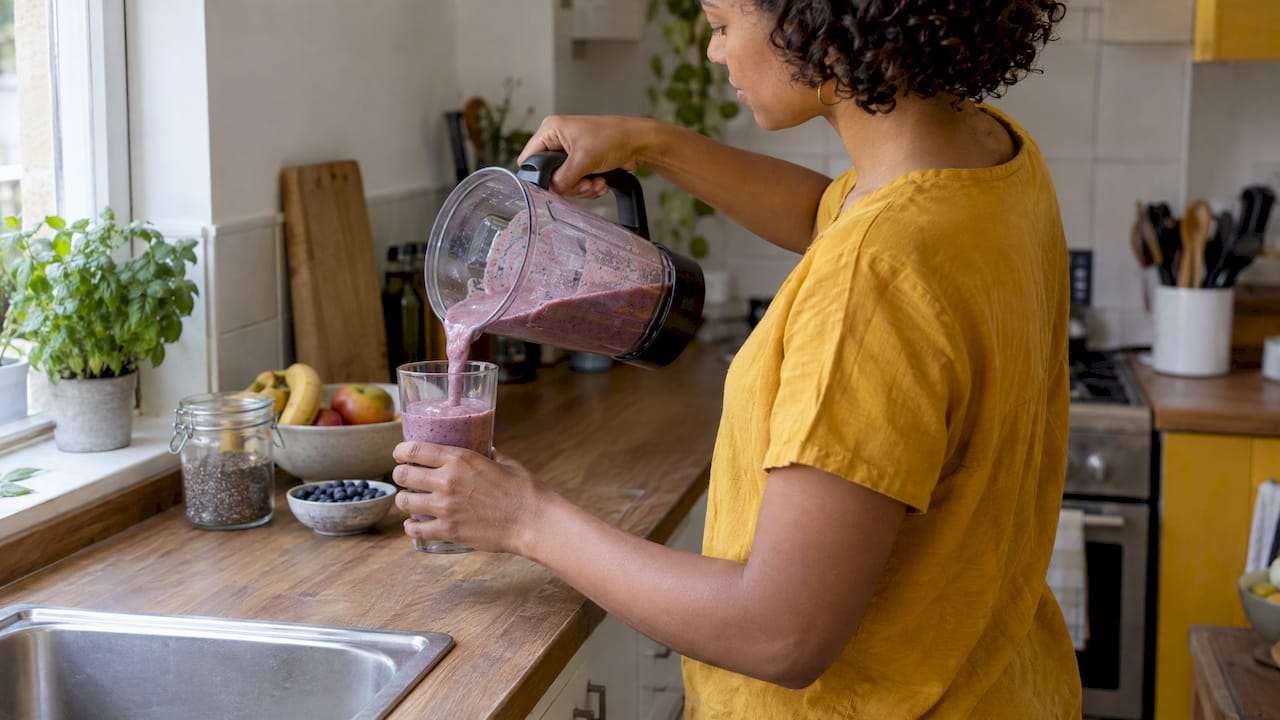
Pudding is not the only way to use chia. A chia smoothie is the faster option when you have two minutes instead of eight hours. The seeds add fiber and a little body, and they hydrate as the smoothie sits.
A reliable template, based on Healthline’s protein and fiber smoothie:
¾ cup milk
½ cup Greek yogurt or cottage cheese
1 tablespoon chia seeds
Fruit of your choice
Optional: avocado or a handful of greens
Chia banana smoothie
A simple version for busy mornings:
Blend ¾ cup milk, 1 ripe banana, ½ cup Greek yogurt and 1 tablespoon chia seeds until smooth.
Add a pinch of cinnamon, or a spoonful of peanut butter for extra staying power.
Let it sit for a few minutes before drinking. It will thicken slightly as the seeds absorb liquid.
For a thicker smoothie bowl, use a frozen banana and less milk. For a thinner drink, add a splash of milk and blend again. Because chia keeps swelling, blend a smoothie just before you drink it if you prefer it thin.
Smoothie variations
Berry chia: Frozen mixed berries, milk, yogurt and chia.
Green chia: Spinach, pineapple, banana, milk and chia. Our vegetable smoothie tips cover how to add greens without a bitter taste.
Tropical: Mango, coconut milk and chia, with a squeeze of lime.
Vegan: Swap the yogurt for soy yogurt or a scoop of silken tofu.
To make a smoothie a full breakfast, make sure it includes a protein source and some fruit. For a snack, halve the portion.
Other Ways to Use Chia Seeds
Once you keep a bag in the pantry, chia goes well beyond pudding:
Stir a tablespoon into overnight oats or yogurt.
Make a quick fruit jam: mash berries with chia and let it thicken, no pectin needed in small batches.
Mix into energy balls with dates and nut butter, as in our no-bake energy balls.
Add to pancake or muffin batter for extra fiber.
Use in dessert cups layered with fruit and Greek yogurt.
Our Perspective
We built Boost Eat around a simple belief: healthy food should be easy enough that you actually make it. Chia pudding is a perfect example. It takes five minutes, it uses ingredients most kitchens already have, and it bends to nearly every diet we write for: vegan, gluten-free, low-calorie and sugar-free.
What we see again and again is that people do not fail at healthy eating because they lack knowledge. They fail because mornings are rushed. A jar that is already waiting in the fridge solves that. So we focus on wholesome ingredients, short steps and recipes that can be adapted for the whole family, including kids who need a sweet-tasting snack without added sugar.
Our advice is to master the base ratio, then play. Swap the milk, change the fruit, try a spice. Once the method is second nature, you can build a week of breakfasts and snacks from a single bag of chia seeds, and that is exactly the kind of practical, creative cooking we love to share.
Simos Boost-eat.com Founder
Get More Recipes in Member’s Kitchen
If you like having a plan for the week, Boost Eat Member’s Kitchen is where we gather our recipes for easy breakfasts, smoothies, snacks and desserts. It costs €7 per month or €70 per year, and you can join Member’s Kitchen at any time.
We also offer the NutriLens App at €5 per month or €50 per year, as a companion for keeping your healthy eating on track. You can learn more about who we are on our About page or browse everything on the Boost Eat homepage.
Frequently Asked Questions
How much chia seed do I use for chia pudding?
A good starting point is 2 tablespoons of chia seeds for every ½ cup of milk, which makes one serving. If the finished pudding is too runny, stir in another teaspoon of seeds and chill for another hour. If it is too thick, loosen it with a splash of milk.
Can I make chia pudding in an hour?
You can eat it after an hour, but it will be looser and the seeds may feel less soft. At least 3 hours is the minimum recommended by Cleveland Clinic, and overnight gives the best texture. Stirring after the first few minutes helps it set more evenly.
Why does my stomach feel strange after chia pudding?
Chia is high in fiber, so a large portion can cause bloating if your body is not used to it. Begin with a smaller serving, make sure the seeds are fully soaked, and drink water through the day. If you have IBS or another digestive condition, speak with your doctor or a dietitian first.
Can I put chia seeds in a smoothie instead of making pudding?
Yes. One tablespoon per smoothie is a good amount for fiber and a slightly thicker texture. Blend with milk, yogurt and fruit, then drink it soon after blending, since the seeds continue to absorb liquid as it sits.
Can kids eat chia pudding?
Many families serve it as a snack or dessert, especially sweetened only with fruit. Use a small portion, make sure the seeds are fully soaked, and check with your pediatrician if your child is very young or has a feeding or digestive concern.
Sources
Chia Seeds, The Nutrition Source, Harvard T.H. Chan School of Public Health
Chia Water vs. Chia Pudding: Which One Is More Digestible?, Verywell Health
The science of why chia seeds are a superfood, National Geographic
Best Time to Eat Chia Seeds for Maximum Fiber Benefits, EatingWell
Recommended
General Entertainment & Information Purposes Only.
At Boost-Eat.com and our partners we share content for general entertainment and information. It’s not medical, dermatological, nutritional, or fitness advice and shouldn’t replace guidance from a licensed professional. If you’re making health-related decisions, please check with a qualified expert — and know that using this site and its information is at your own discretion.
Discover more from BOOST EAT
Subscribe to get the latest posts sent to your email.

