A dairy-free smoothie is simple to make: replace the milk or yogurt with a plant-based liquid or yogurt, add fruit, and blend. Soy, oat, almond or coconut milk all work, and frozen fruit or a spoonful of nut butter gives you the creamy texture people miss. Below you will find the swaps that work, four recipes with real nutrition numbers, ways to make a smoothie filling, and what to check on labels if you are avoiding milk for allergy reasons.
Key Takeaways
- Dairy-free means no milk or milk-derived ingredients at all. Lactose-free is a different thing, and it is not automatically safe for a milk allergy.
- Unsweetened, fortified soy, oat, almond or coconut milk are the easiest bases. Frozen fruit, banana and nut butter make the texture thick and creamy.
- Beans, seeds, nuts, oats and flaxseed add protein and fiber, so a smoothie can work as a real breakfast.
- Skip added sugar by choosing unsweetened ingredients and using juice sparingly.
- A blended smoothie keeps in the fridge for about 24 hours. Give it a quick reblend before drinking.
Table of Contents
- Dairy-free vs. lactose-free: what is the difference?
- What can you use instead of milk in a smoothie?
- The building blocks of a good dairy-free smoothie
- Four dairy-free smoothie recipes to start with
- How to make a dairy-free smoothie filling
- Cutting added sugar without losing flavor
- Smoothies for kids and families
- Store, reblend and prep ahead
- Our perspective: why we keep dairy-free smoothies simple
- Get more recipes with Member’s Kitchen
- FAQ
- Sources
Dairy-free vs. lactose-free: what is the difference?
The two terms get swapped constantly, and for some readers the difference matters a great deal.
A dairy-free smoothie contains no milk or milk-derived ingredients, including casein, whey and lactose. A lactose-free smoothie can still be made with cow’s milk whose lactose has been removed or broken down, so it may still contain milk proteins. That is why lactose-free is not necessarily safe for a milk allergy.
Here is how the two issues differ:
- Lactose intolerance is a digestion issue with the milk sugar lactose.
- Milk allergy is an immune reaction to milk proteins such as casein or whey. According to Mass General Brigham, plant-based milk and yogurt leave those milk proteins out.
If you are blending for someone with a milk allergy, read the labels. The University of Nebraska’s Food Allergy Research & Resource Program notes that “dairy-free” has no FDA regulatory definition in the United States. Check the ingredient and allergen statements for milk proteins such as caseinates and whey, especially on protein powders, yogurts and frozen add-ins.
If you only avoid lactose for comfort, a smoothie made with plant milk and plant yogurt solves it too, and the recipes below work for both groups.
What can you use instead of milk in a smoothie?
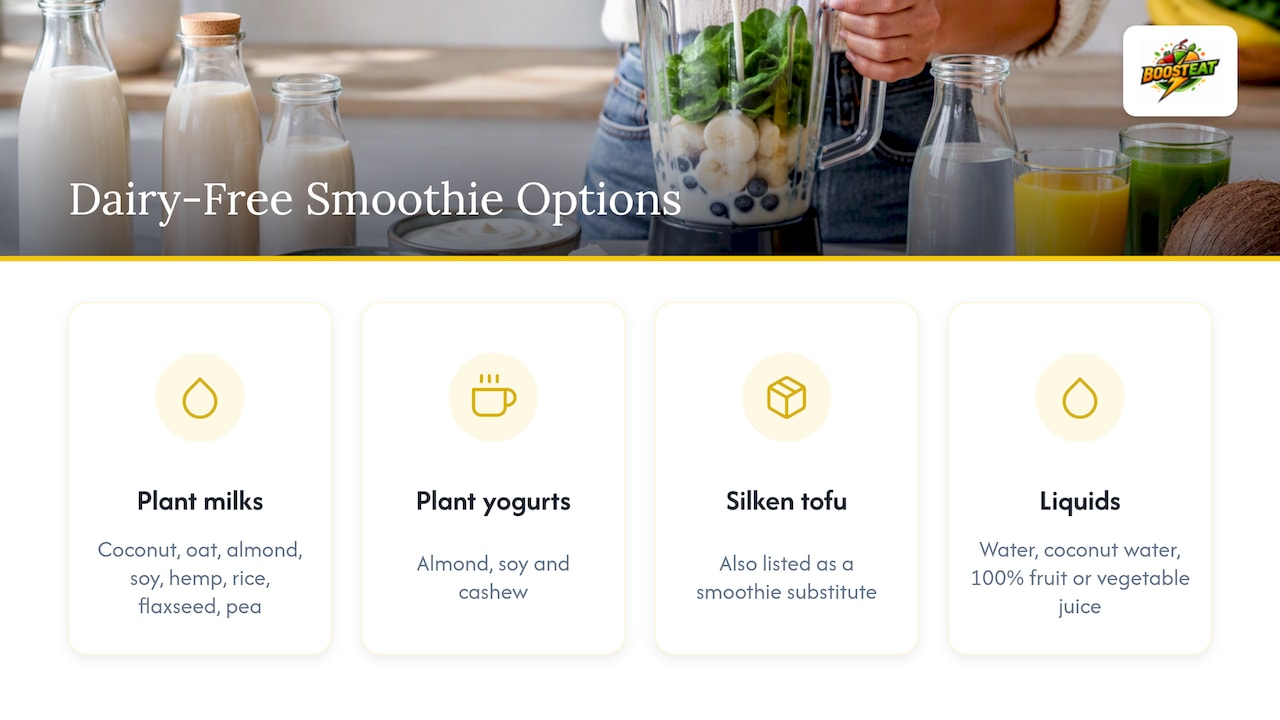
You have more options than most people expect. The VA nutrition service suggests coconut, oat, almond or soy milk, silken tofu, almond or soy yogurt, water, coconut water, or 100% fruit or vegetable juice. Mass General Brigham also lists hemp, rice, flaxseed and pea beverages as dairy-free milk substitutes, and cashew yogurt among the yogurt alternatives.
Pick the base for the result you want
The base changes the texture and the nutrition, so choose it on purpose:
| Base | What it does in a smoothie | Good for |
|---|---|---|
| Soy milk | Mild flavor, higher protein | Breakfast and post-workout blends |
| Oat milk | Naturally sweet, silky | Banana, cinnamon and chocolate blends |
| Almond milk | Light, slightly nutty | Berry and green smoothies |
| Coconut milk | Rich and tropical | Mango, pineapple and strawberry blends |
| Silken tofu | Thick, neutral, protein-rich | “Milkshake” style smoothies |
| Water or coconut water | Lightest texture | Fruit-forward, low-calorie blends |
The VA guide makes the same point: thicker bases give creamier smoothies, water makes a lighter one, and protein-containing bases help when protein is the priority. The National Kidney Foundation adds that soy milk is high in protein, while almond milk provides vitamin E and antioxidants.
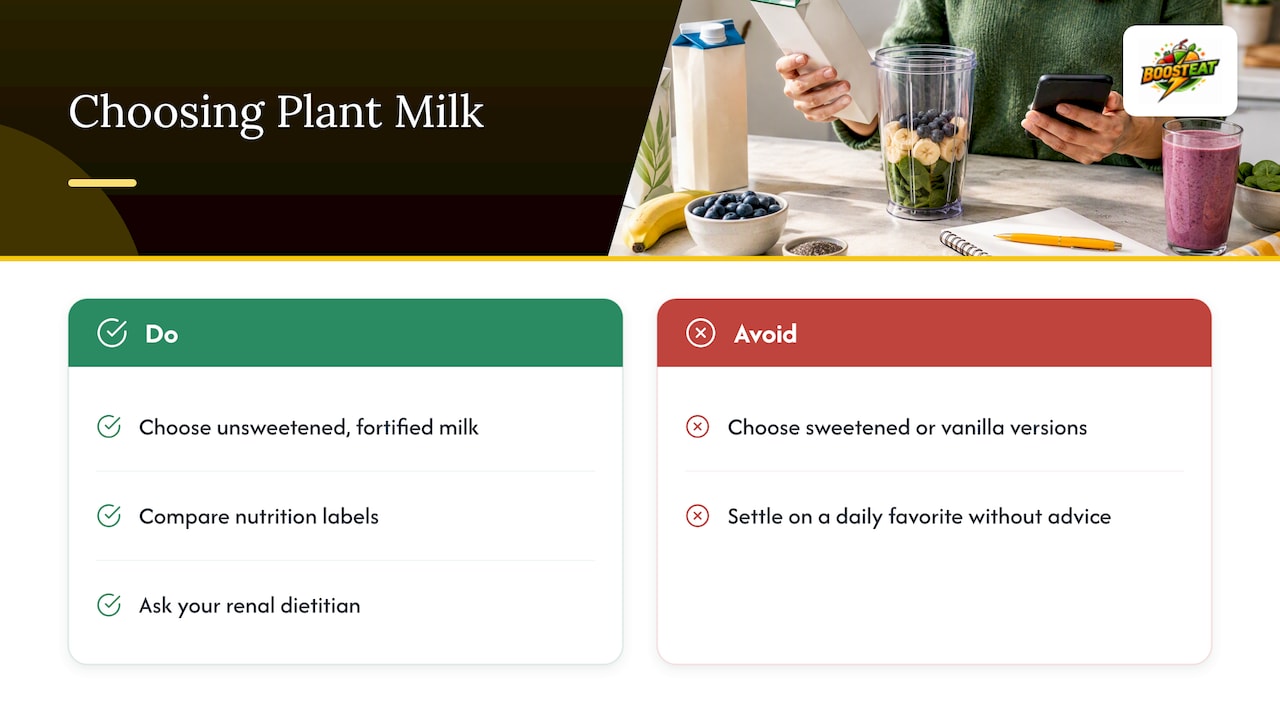
Choose unsweetened and fortified
Rutgers Cooperative Extension recommends unsweetened, fortified non-dairy milks and says calories, protein and micronutrients differ from brand to brand. Spend ten seconds comparing nutrition labels. Sweetened and vanilla versions can add a surprising amount of sugar to a drink that looked healthy.
If you have kidney disease or calcium-oxalate kidney stones, the National Kidney Foundation points out that potassium, phosphorus and oxalate levels vary between plant milks. Ask your doctor or renal dietitian which one suits you before you settle on a daily favorite.
The building blocks of a good dairy-free smoothie
Once you have a base, a formula keeps every blend balanced. Johns Hopkins Medicine recommends combining protein, fruit, greens and a liquid base. Here is the version we use at home:
- Liquid: about 1 cup of unsweetened plant milk, coconut water or water.
- Fruit: 1 to 1½ cups, with at least some of it frozen.
- Creaminess: half a banana, a spoonful of nut butter, plant yogurt, avocado or silken tofu.
- Protein or fiber: oats, seeds, nuts, beans or a plant protein powder.
- Greens (optional): a handful of spinach blends in without much taste. Our guide to vegetable smoothies shows how to sneak in more.
- Flavor: cocoa, cinnamon, nutmeg, ginger, cardamom or a drop of vanilla extract. The VA guide lists these as easy ways to vary flavor without adding sugar.
Memorial Sloan Kettering advises putting the liquid in the blender first, then adding the rest. It helps the blades catch everything and keeps the motor from straining.
Four dairy-free smoothie recipes to start with
These recipes come from health organizations and a national broadcaster’s test kitchen, so the nutrition figures are published rather than guessed. Brands and ingredient choices change the numbers, so treat them as a guide.
1. Berry banana breakfast smoothie
This one is built to be filling. According to BBC Food, you blend frozen mixed berries, a ripe banana, oats, no-added-sugar cashew butter, mixed seeds and about 250 ml (a little over 1 cup) of soy or almond milk until thick and smooth.
Why it works: the oats and seeds bring fiber, the cashew butter brings richness, and the frozen berries make it cold and thick without ice.
2. Simple strawberry smoothie for kids
Akron Children’s Hospital shares a recipe with ½ cup vanilla dairy-free yogurt, ½ cup strawberries, two ice cubes and 2 teaspoons vanilla extract, blended until smooth. One serving provides 102 calories, 3 g protein, 20 g carbohydrate and 2 g fiber. The hospital suggests adding a ripe banana if you want it sweeter and thicker.
It is a good first smoothie for children because there are only four ingredients and no added sweetener. Check the yogurt label if your child has a nut or soy allergy as well.
3. Almond-cherry smoothie
Memorial Sloan Kettering’s version is dairy-free and vegan and makes two servings. It uses frozen cherries, almond butter, vegan vanilla ice cream and vanilla almond milk. One serving provides 235 calories, 42 g carbohydrate, 18 g fat and 7 g protein. It is closer to a dessert, so it suits an afternoon treat or someone who needs extra calories.
4. Nut-butter banana protein smoothie
Johns Hopkins Medicine’s dairy-free example uses nut or seed butter, banana, protein powder, coconut yogurt, almond or cashew milk, flaxseed and ice. They report 482 calories, 41 g carbohydrate, 37.4 g protein and 22.3 g fat for one serving. That is a full meal replacement, and the best fit for a post-workout shake or a long morning with no time for lunch.
How to make a dairy-free smoothie filling
A fruit-only smoothie can leave you hungry in an hour. Rutgers Cooperative Extension recommends adding beans, seeds and nuts for protein and fullness. It also notes that almond or soy milk can add protein, and that oats, flaxseeds or quinoa add fiber and help you feel full longer.
Here are practical add-ins:
- Rolled oats: 2 to 3 tablespoons, blended until smooth. Soak them in your milk for five minutes if your blender is modest. Our overnight oats guide shows how to do the soaking the night before.
- Ground flaxseed or chia: a tablespoon adds fiber and thickens the drink.
- Nut or seed butter: a tablespoon gives richness and staying power.
- White beans or silken tofu: neutral in flavor, and they add protein and body.
- Plant protein powder: helpful if you want 20 g or more of protein. Read the label for milk-derived ingredients, because some powders blend whey with plant protein.
A quick rule: aim for something from each of three groups, a fruit or vegetable, a protein or healthy fat, and a fiber source. That is what turns a drink into a meal.
Cutting added sugar without losing flavor
Many smoothies are sweeter than they look. Fruit is fine, but sweetened milks, flavored yogurts and juice stack up quickly. These habits help:
- Pick unsweetened bases and yogurts. The VA guide recommends unsweetened or no-sugar-added ingredients. If you use canned fruit, choose fruit packed in juice rather than syrup, or no-sugar-added versions.
- Go easy on juice. The VA suggests avoiding or limiting fruit juice when sugar control matters. Rutgers explains that juice is more calorie-dense and contains more concentrated simple sugars than whole fruit, so use it sparingly.
- Let frozen fruit do the work. Frozen fruit or vegetables thicken a smoothie, so you need less sweetener and no ice to water it down.
- Use spices. Cinnamon, vanilla and cardamom make a blend taste sweeter without adding sugar.
- Use ripe bananas. The spotty ones are sweetest, and they often replace any added sweetener altogether.
If you are looking for healthy, sugar-free ideas beyond drinks, our no-bake energy balls make a good partner for a smoothie snack.
Smoothies for kids and families
Children often take to smoothies because they are cold, sweet and easy to drink. A few things help:
- Start with a short ingredient list, like the strawberry recipe above, and add one new ingredient at a time.
- Keep portions kid-sized. A small glass or a reusable pouch is plenty for a snack.
- Let them choose the fruit and press the blender button. Kids who help make food tend to be more willing to drink it.
- Check allergens. Coconut, soy and tree-nut milks are common bases, and some children react to them. If your child has a milk allergy, keep to labels that list no milk proteins.
Frozen smoothie pops are also an easy way to stretch a batch. BBC Food notes that leftover smoothie can be frozen as ice lollies.
Store, reblend and prep ahead
BBC Food says a smoothie can be kept in the refrigerator for 24 hours. It may separate as it sits, so briefly reblend it to restore the texture. You can also freeze smoothies in lolly molds, or freeze and thaw them for later.
For busy mornings, try this routine:
- Portion fruit, oats and seeds into freezer bags on the weekend.
- In the morning, tip a bag into the blender, add your plant milk, and blend for about a minute.
- Pour into a travel cup and go.
We cover the full method in our smoothie meal prep guide, including how to portion packs so they blend evenly.
Our perspective: why we keep dairy-free smoothies simple
We built Boost Eat around one idea: healthy food should be easy enough to make on a Tuesday morning. Dairy-free smoothies are a perfect example. You do not need a long list of specialty ingredients. A good plant milk, frozen fruit, and one source of protein or fiber will give you a drink that tastes great and keeps you going.
Many of our readers are managing dietary restrictions, feeding kids, or simply trying to eat better without more work. That is why our recipes lean on wholesome ingredients, and why we offer vegan, gluten-free, low-calorie and sugar-free options side by side.
Our advice is to start with one blend you love, learn how the base changes the texture, and then experiment. The best smoothie is the one you will actually make again tomorrow.
Simos Boost-eat.com Founder
Get more recipes with Member’s Kitchen
If you like having new ideas ready for every breakfast and snack, Boost Eat Member’s Kitchen is our recipe membership. It costs €7 per month or €70 per year. It is designed to take the guesswork out of healthy, quick meals for individuals and families. You can join Member’s Kitchen here, or browse the free recipes on our home page.
It is a good fit if you are cooking for dietary needs, want kid-friendly ideas, or enjoy Greek-inspired dishes as well as smoothies. You can also pair your blends with our hummus recipes for a savory snack.
FAQ
What can I replace milk with in a smoothie?
Use unsweetened soy, oat, almond or coconut milk, or go lighter with water or coconut water. Silken tofu and plant-based yogurt also give a creamy result. Pick a protein-containing base such as soy if you want the smoothie to be more filling.
Is a lactose-free smoothie the same as a dairy-free smoothie?
No. Lactose-free products can still be made from cow’s milk with the lactose removed, so they may contain milk proteins. A dairy-free smoothie leaves out milk entirely. If you have a milk allergy, choose dairy-free and read the ingredient list for casein and whey.
How do I make a dairy-free smoothie thick and creamy?
Use frozen fruit, a frozen banana, or a spoonful of nut butter, and choose a thicker base like coconut milk, plant yogurt or silken tofu. Add oats or ground flaxseed if you want extra body. Start with less liquid and add more until the blender moves freely.
How long does a dairy-free smoothie last?
A blended smoothie keeps in the refrigerator for about 24 hours. It may separate, so reblend it briefly before you drink it. For longer storage, freeze it in molds as smoothie pops or in portions you can thaw later.
Can kids drink dairy-free smoothies?
Yes, and simple recipes with unsweetened ingredients work well. Keep portions small, and check for nut, soy or coconut allergies before you choose a base. If your child has a milk allergy or special dietary needs, ask your pediatrician or a registered dietitian about the best plant milk.
Sources
- Is lactose-free the same as dairy-free? (Canadian Digestive Health Foundation)
- Dairy-Free and Non-Dairy? (Food Allergy Research & Resource Program, University of Nebraska)
- Lactose-Free v. Dairy-Free (Mass General Brigham)
- Create Your Own Smoothie (VA Nutrition and Food Services)
- Build a Better Smoothie (Rutgers Cooperative Extension)
- Plant Based Milk and Kidney Disease (National Kidney Foundation)
- How to Make a Healthy Smoothie (Johns Hopkins Medicine)
- Nourishing Smoothie and Hot Latte Recipes (Memorial Sloan Kettering)
- Healthy smoothie recipe (BBC Food)
- Dairy-Free Diet Recipes (Akron Children’s)
Recommended
- Top Vegetable Smoothie Tips: Recipes and Health Benefits
- Mastering Smoothie Meal Prep: Tips for Fresh, Fast Blends
General Entertainment & Information Purposes Only.
At Boost-Eat.com and our partners we share content for general entertainment and information. It’s not medical, dermatological, nutritional, or fitness advice and shouldn’t replace guidance from a licensed professional. If you’re making health-related decisions, please check with a qualified expert — and know that using this site and its information is at your own discretion.
Discover more from BOOST EAT
Subscribe to get the latest posts sent to your email.

