
Spanakorizo is Greek spinach rice: a lemony, herb-heavy one-pot dish that takes about 45 minutes and uses pantry staples plus a big pile of fresh spinach. You wilt onions and spinach in olive oil, stir in medium-grain rice and a small amount of water, simmer until the rice is tender, and finish with lemon and dill. Below you will find our full recipe, the technique that keeps it from turning watery, easy swaps for vegan and gluten-free eating, and a realistic look at the nutrition.
Key Takeaways
- Spanakorizo is a Greek vegetarian pilaf of spinach, rice, olive oil and herbs, often finished with lemon and served with feta.
- Use a lot of spinach (about 2 pounds for 4 servings) and very little water: the spinach releases its own liquid and steams the rice.
- Medium-grain rice gives the most tender, slightly creamy result, and long-grain works in a pinch.
- It is naturally vegan without the feta, and naturally gluten-free when your stock is.
- Leftovers keep in the fridge for up to 3 days and taste good warm or cold.
Table of Contents
- What spanakorizo is (and why Greek families make it so often)
- Ingredients for 4 servings
- How to make spanakorizo, step by step
- The technique that makes the difference: less water
- Easy variations
- Is spanakorizo healthy?
- Serving ideas
- Storing and reheating
- Common mistakes to avoid
- Want more recipes like this?
- FAQ
- Sources
What spanakorizo is (and why Greek families make it so often)
The name simply means “spinach rice” (spanaki is spinach, rizi is rice). It is a humble, everyday dish built on olive oil, onion, spinach, rice and dill, then brightened with lemon. It can be eaten hot or cold, which is part of why it shows up on so many Greek tables, from weeknight dinners to the fasting-season menus when meat and dairy are set aside.
If you have only had spinach rice as a dry side dish, spanakorizo will feel different. A good one is soft, glossy and a little saucy, closer to a loose risotto than to separate fluffy grains. Think of it as a main course with a side of feta, olives and crusty bread rather than a garnish for chicken.
That comfort-food quality is what we love about it at Boost Eat. It is cheap, it is built from whole ingredients, and it sneaks a large amount of greens into a plate your kids will actually eat.
Ingredients for 4 servings
These quantities make four generous main-course portions or six smaller side portions.
| Ingredient | Amount | Notes |
|---|---|---|
| Fresh spinach | 2 lb (about 1 kg) | Mature or baby, washed well and roughly chopped |
| Medium-grain rice | 1 cup (about 200 g) | Rinsed until the water runs mostly clear |
| Extra virgin olive oil | 1/3 cup | Plus a little extra to finish |
| Yellow onion | 1 large | Finely chopped |
| Spring onions (scallions) | 4 | Thinly sliced, white and green parts |
| Fresh dill | 1/2 cup, chopped | Plus more for serving |
| Tomato paste | 1 tablespoon | Optional, for a rosier, deeper flavor |
| Water or vegetable stock | About 1 1/4 cups | Hot, and add less if your spinach is very wet |
| Lemon | 1 large | Juice, plus wedges for the table |
| Salt and black pepper | To taste | |
| Feta | 4 oz | Optional, for serving |
Why so much spinach?
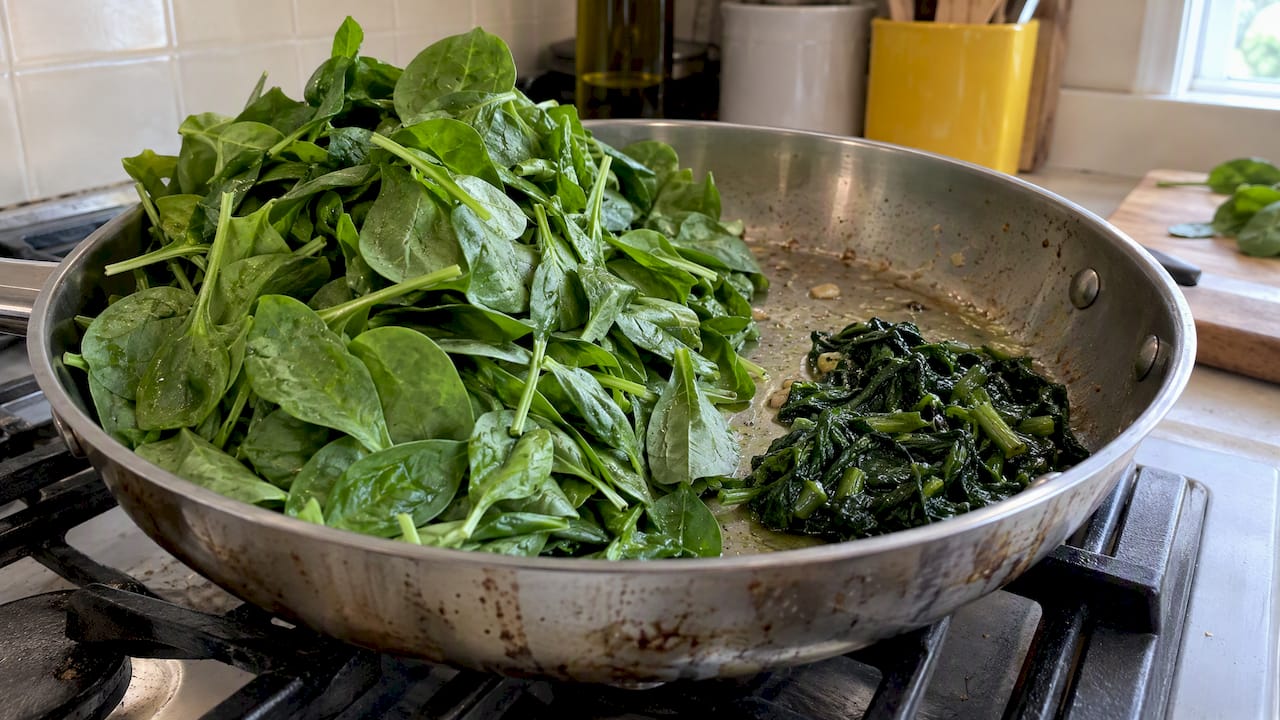
The pile looks absurd when it is raw. Spinach collapses to a fraction of its volume as it wilts, and that wilted mass is what gives the dish its green color and flavor. Trust the quantity: a smaller amount leaves you with rice flecked with spinach rather than spinach rice.
Fresh or frozen spinach
Fresh gives the best flavor and texture. If you only have frozen, use about 1 1/2 pounds (700 g), thaw it completely, and squeeze out as much water as you can before it goes in the pot. Then reduce the added water by a few tablespoons, because frozen spinach holds a lot of liquid.
Choosing your rice
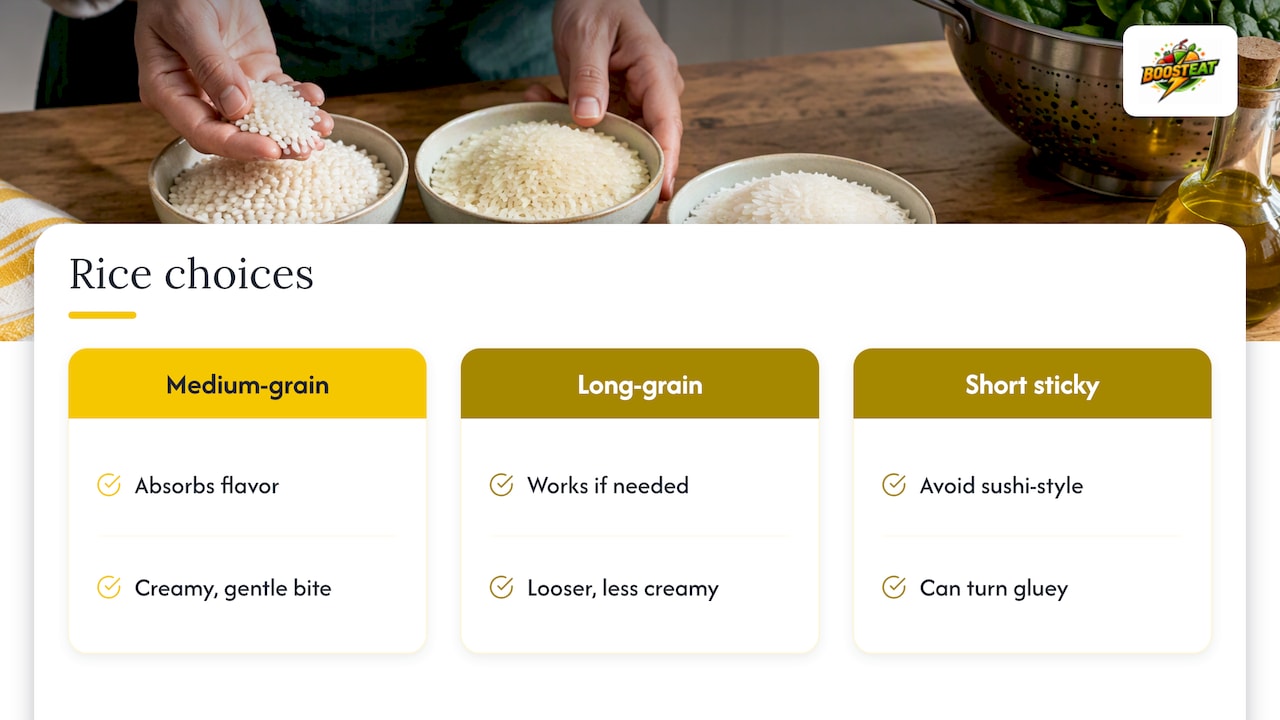
Medium-grain rice (the kind sold as Calrose in many US stores, or Greek rice such as the type used for gemista) is the best fit. It absorbs flavor, releases just enough starch to make the dish creamy and still keeps a gentle bite. Long-grain rice works if that is what you have; the result will be a little looser and less creamy. Avoid very short, sticky sushi-style rice, which can turn gluey.
Herbs
Dill is the signature. Many Greek cooks add more than one herb, though: a chef writing in the Greek daily Kathimerini suggests as many as four or five bunches of herbs in the pot, including fennel fronds and dill. At home, a mix of dill with a handful of chopped parsley or mint is an easy, accessible version.
How to make spanakorizo, step by step
Plan on about 45 minutes from the first chop to the table, including a short rest.
- Prep everything first. Wash the spinach in several changes of water to remove grit, then chop it coarsely. Chop the onion, slice the spring onions, chop the dill, rinse the rice, and juice the lemon.
- Soften the onions. Warm the olive oil in a wide, heavy pot or deep skillet over medium heat. Add the onion with a pinch of salt and cook for 6 to 8 minutes, stirring, until soft and translucent but not browned. Add the spring onions for the last 2 minutes.
- Wilt the spinach. Add the spinach in handfuls, stirring each batch down before adding the next. It takes about 8 minutes to collapse fully. Let the pot bubble gently so some of the released liquid cooks off.
- Toast the rice. Stir in the rinsed rice and the tomato paste, if using, and cook for 1 to 2 minutes until every grain is coated in oil.
- Add liquid and herbs. Pour in the hot water or stock, add half the dill, season with salt and pepper, and stir once. The liquid should come only partway up the rice, because the spinach will contribute plenty more.
- Simmer. Reduce the heat to low and cook uncovered for 18 to 20 minutes, stirring occasionally and gently. If the pot looks dry before the rice is tender, add a splash of hot water.
- Finish and rest. Turn off the heat, stir in the lemon juice, the rest of the dill and a drizzle of fresh olive oil. Cover the pot with a clean kitchen towel and lid and rest for 5 minutes.
- Serve. Spoon into bowls, top with crumbled feta if you like, and add a lemon wedge and a last pinch of dill.
The technique that makes the difference: less water
The most common mistake is treating spanakorizo like plain boiled rice. Spinach is mostly water, and it gives that water up as it cooks. Greek cooking guidance is consistent here: the Kathimerini piece recommends using as little added water as possible, because too much turns the dish watery and mutes the spinach flavor. The same article describes a version where the rice cooks mainly in the steam from the greens, using only around 100 ml of water for about 800 g of spinach.
You do not have to go that far on your first attempt. A practical approach:
- Start with the smaller amount of water in the recipe above.
- Check the pot at the 12-minute mark. The rice should be swimming in a loose, green sauce, not sitting in a puddle and not sticking to the pan.
- Add hot water a splash at a time only if needed. You can always add liquid, but you cannot take it out.
Texture: saucy, not dry
Spanakorizo is meant to be moist and slightly loose. If your pot looks like a firm, separate-grained pilaf, stir in a few tablespoons of hot water and the final drizzle of olive oil after the rest. The dish will thicken as it cools, so a looser texture straight from the stove is exactly right.
Easy variations
Vegan and dairy-free
Spanakorizo is easy to make vegan: leave out the feta, use vegetable stock or water, and rely on olive oil and lemon for richness. A spoonful of toasted pine nuts or sunflower seeds adds the creamy, salty contrast the cheese would have provided.
Gluten-free
Rice, spinach, herbs and olive oil are all naturally gluten-free. The only things to check are your stock (some contain wheat-based ingredients) and any store-bought add-ons. Read labels, and if you cook for someone with celiac disease, choose products labeled gluten-free.
With tomato
A tablespoon of tomato paste, or one grated ripe tomato added with the rice, gives a soft pink-green color and a gentle sweetness. Many home cooks consider this the classic way.
Lighter, lower-calorie
Reduce the olive oil to 3 tablespoons, add an extra handful of spinach, and serve with a big salad. You will lose some silkiness, so finish with plenty of lemon and dill to keep the flavor bright.
With extra protein
Top with a soft-boiled egg, stir in a can of drained white beans or chickpeas near the end, or serve alongside grilled fish or chicken. If you enjoy Greek legume dishes, our revithada, a slow-baked Greek chickpea stew, makes a hearty companion for a full vegetarian table.
Is spanakorizo healthy?
It is a balanced, plant-forward dish: complex carbohydrates from the rice, a large portion of leafy greens, and heart-friendly fats from olive oil. Numbers vary a lot with the amount of oil and the serving size, so treat any figure as an estimate. For a reference point, a university dining program’s nutrition label lists a 3-ounce serving of its spanakorizo at 118 calories, with about 2.9 g of protein, 4.9 g of fat, 1.1 g of fiber and 1.6 mg of iron. Your main-course bowl will be larger than 3 ounces, so the totals will be higher.
What changes the numbers most:
- Olive oil. Each tablespoon adds roughly 120 calories. A third of a cup for four servings is generous but traditional.
- Feta. It adds protein and calcium but also sodium, so measure rather than pile it on.
- Portion size. A small scoop as a side and a big bowl as a main course are very different amounts of food.
- Stock. Store-bought stock can be salty. Choose a low-sodium kind or use water.
If you are managing a medical condition such as kidney disease, or take a blood thinner like warfarin (spinach is rich in vitamin K), ask your doctor or a registered dietitian how much leafy green is right for you.
Serving ideas
Spanakorizo is happy on its own, but a few additions make it a complete meal:
- Crumbled feta, Kalamata olives and a thick slice of crusty bread.
- A tomato and cucumber salad with red onion and oregano.
- Plain Greek yogurt on the side, which suits the lemony rice well. If you want something sweet afterward, try our quick Greek yogurt desserts.
- Roasted or grilled vegetables, or our gemista, Greek stuffed vegetables, for a full Greek spread.
Storing and reheating
Cool the rice quickly, within about an hour of cooking, then refrigerate it in a covered container for up to 3 days. Rice left at room temperature for long stretches can be a food safety risk, so do not leave the pot on the stove overnight.
To reheat, warm it gently in a saucepan over low heat with a splash of water, stirring often, or use the microwave on low power in short bursts. Since the rice firms up in the fridge, the splash of water restores the saucy texture. Because the dish is also good cold, a portion packed in a lunch box with a lemon wedge needs no reheating at all.
Common mistakes to avoid
- Too much water. The number one cause of bland, soupy spanakorizo.
- Skimping on onions. They build the sweet base. Give them the full 6 to 8 minutes.
- Skipping the rinse. Unrinsed rice releases extra starch and can turn the pot gluey.
- Stirring constantly. A few gentle stirs are enough. Over-stirring breaks the grains.
- Adding lemon too early. Heat dulls its brightness, so stir it in at the end.
- Under-seasoning. Spinach and rice both need salt. Taste before the rest and adjust.
Our take: spanakorizo is the kind of food we cook for
We started Boost Eat because we wanted healthy food that is easy, flavorful and honest about what is in it. Spanakorizo is exactly that: a pot, a handful of whole ingredients, and a meal that works for vegans, for families, for anyone trying to eat more greens without making dinner a project.
Greek home cooking taught us that wholesome food does not need complicated steps. Good olive oil, fresh herbs, lemon and patience do most of the work. That is the thinking behind our Greek recipes, and it is why we also build our smoothies, snacks and desserts around simple, recognizable ingredients and offer sugar-free, vegan and gluten-free options.
If you cook spanakorizo once, you will probably cook it often. Make a double batch, keep it for lunches, and let it be the dish you reach for on busy nights.
Simos Boost-eat.com Founder
Want more recipes like this?
If you like having a reliable, healthy idea ready for every meal, our Member’s Kitchen is built for that. It costs €7 per month or €70 per year, and it is designed to make everyday healthy cooking easier for individuals and families.

You can also browse everything we publish, from Greek classics to smoothies and snacks, on the Boost Eat homepage. For a quick breakfast to pair with your Greek dinners, start with our overnight oats guide.
FAQ
What is the difference between spanakorizo and spanakopita?
Spanakorizo is a rice dish cooked in one pot with spinach, onions, herbs and lemon. Spanakopita is a baked pie of spinach and feta wrapped in layers of phyllo pastry. Both are Greek and both feature spinach, but spanakorizo is simpler, dairy-free by default and does not need any dough.
Can I make spanakorizo ahead of time?
Yes. It keeps in the fridge for up to 3 days and holds up well for meal prep. Reheat it gently with a splash of water, or serve it cold with lemon and olive oil. Add the final squeeze of lemon and the dill after reheating so the flavors stay fresh.
Why is my spinach rice watery or mushy?
Usually there was too much liquid in the pot, since spinach releases plenty of its own. Next time, cut the added water and check the pot partway through cooking. Overstirring and using very short-grain rice can also make it mushy, so stir gently and choose medium-grain rice.
Is Greek spinach rice a complete meal?
It is a satisfying vegetarian main with grains and greens, but protein is modest. Add feta, eggs, beans or chickpeas, or serve it with fish or chicken, to round it out. A side salad and a spoonful of yogurt make it more filling.
Can I use brown rice?
Yes, though the dish changes. Brown rice needs more liquid and a longer simmer, usually 35 to 45 minutes, so keep hot water nearby and test the grains for tenderness. The texture will be chewier and less creamy than with medium-grain white rice.
Sources
- Spanakorizo, Wikipedia
- Πώς φτιάχνουμε το τέλειο σπανακόρυζο; Kathimerini Gastronomos
- Spanakorizo (Greek Spinach Rice), The Mediterranean Dish
- Nutrition label: Spanakorizo, Greek Spinach Rice, University of Maryland Dining Services
Recommended
- Revithada Recipe: Easy Greek Chickpea Stew for Everyone
- Delicious Greek Gemista: Classic Stuffed Vegetables Recipe
- Delicious Greek Yogurt Dessert Ideas You Can Whip Up Fast
General Entertainment & Information Purposes Only.
At Boost-Eat.com and our partners we share content for general entertainment and information. It’s not medical, dermatological, nutritional, or fitness advice and shouldn’t replace guidance from a licensed professional. If you’re making health-related decisions, please check with a qualified expert — and know that using this site and its information is at your own discretion.
Discover more from BOOST EAT
Subscribe to get the latest posts sent to your email.

