
Greek chickpea stew, called revithada (also spelled revithia or revythia), is a slow-cooked pot of chickpeas, onions, olive oil and bay that turns silky and savory with very little work. Soak dried chickpeas overnight, simmer them until tender, then finish them gently in the oven or on the stove with plenty of good olive oil and a squeeze of lemon. Below you will find our full recipe, a canned-chickpea shortcut, the regional variations worth knowing, and how to store and serve the stew.
Key takeaways
Revithada needs only a handful of pantry ingredients: chickpeas, onion, olive oil, bay leaf, salt and pepper. Lemon, tomato and herbs are optional extras.
Dried chickpeas should be soaked for 8 to 10 hours. Canned chickpeas need no extra cooking, so they turn the dish into a 35-minute weeknight meal.
The traditional version comes from the island of Sifnos, where it is baked slowly in a clay pot.
The stew is naturally vegan and gluten-free, and it tastes even better the next day.
Cool leftovers within 2 hours and eat them within 3 to 4 days.
Table of Contents
What is Greek chickpea stew?
Revithada is a humble, one-pot dish: whole chickpeas cooked until creamy in their own broth, enriched with olive oil and sweetened by slowly softened onions. Pulses have always been central to the Greek table, and Sifnos is especially known for its slow-cooked chickpea soup baked in clay, according to the Greek national tourism organization.
Traditionally the pot goes into a wood-fired oven overnight and is eaten the next day, often on Sundays. It also fits Greek Lenten cooking, since it contains no meat, dairy or eggs.
If you have only had chickpeas in hummus or salads, this will surprise you. The chickpeas break down just enough to thicken the broth, so you get a stew that feels rich without any cream, flour or butter.
How revithada varies by region and cook
Greece has many chickpea dishes, and the name “revithada” covers more than one style:
Sifnos style: chickpeas, a lot of onion, olive oil and bay, baked slowly in a lidded clay pot. Simple and deeply savory.
Lemony stovetop style: thyme, rosemary or dill, with lemon juice stirred in at the end for brightness.
Tomato style: canned or fresh tomatoes, garlic, oregano and sometimes cumin or smoked paprika for a redder, more tangy stew.
Fritters: on Rhodes, the chickpeas become revythokeftedes, or chickpea fritters, a different dish from the Sifnos stew.
We give you a base recipe first, then show how to move it toward each of these styles.
Ingredients for Greek chickpea stew
This makes six generous servings. Amounts are flexible, because the dish is forgiving.
1 pound (450 g) dried chickpeas, or four 15-ounce cans, drained and rinsed
3 large yellow onions, thinly sliced
1/2 cup extra-virgin olive oil, plus more for serving
2 bay leaves
1 teaspoon ground cumin (optional but lovely)
1 teaspoon salt, adjusted at the end
Freshly ground black pepper
Water or vegetable broth, enough to just cover the chickpeas
Juice of 1 lemon, to finish
Chopped fresh dill or parsley, to serve
How much olive oil is normal?
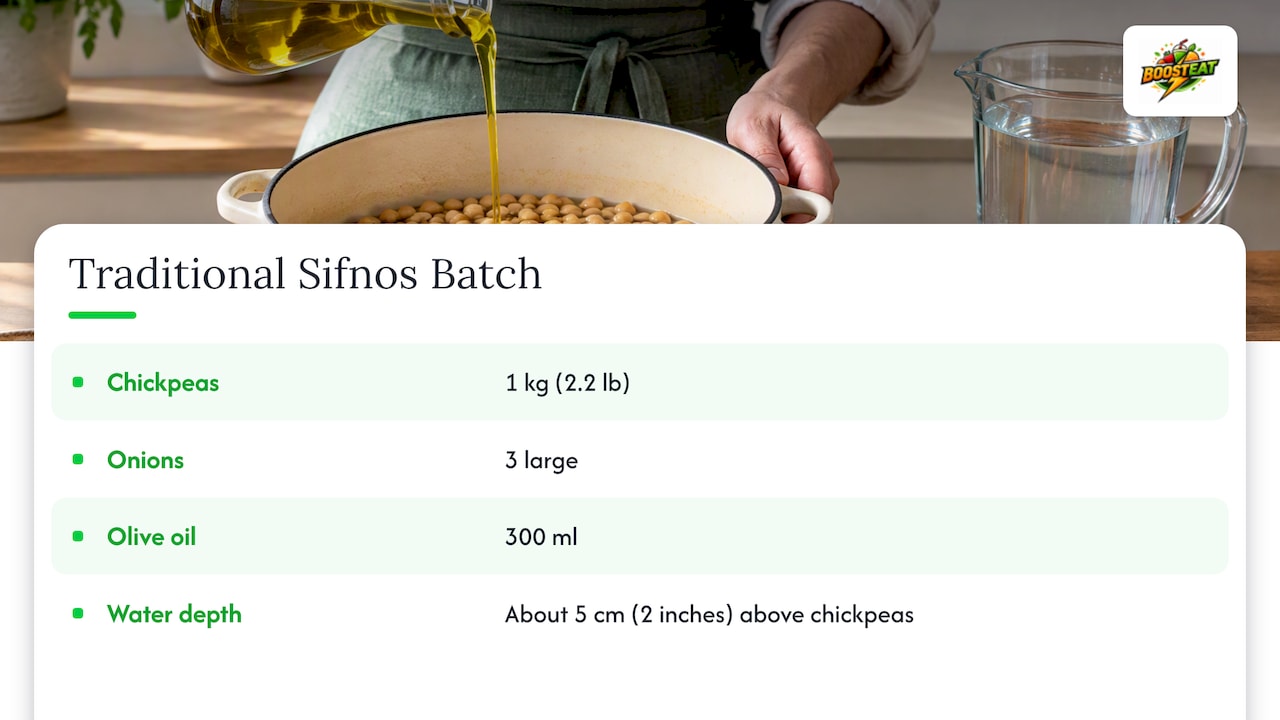
It looks like a lot, and it is meant to. A traditional Sifnos-style batch printed in eKathimerini’s 2025 recipe uses 1 kg (2.2 lb) of chickpeas, 3 large onions and 300 ml of olive oil, with water covering the chickpeas by about 5 cm (2 inches). Our ratio is a little lighter, but the principle is the same: the oil emulsifies with the starchy broth and becomes the silky sauce. If you want to cut back, start with 1/3 cup and add a drizzle at the table.
Dried or canned chickpeas?
Both work. The difference is time and texture.
| Dried chickpeas | Canned chickpeas | |
|---|---|---|
| Prep | Soak 8 to 10 hours, then simmer | Drain and rinse |
| Total time | About 3 to 4 hours, mostly hands-off | About 35 minutes |
| Texture | Creamy, with a rich cooking broth | Softer and quicker to break down, lighter broth |
| Best for | Weekend cooking, big batches, oven-baked revithada | Weeknights and last-minute dinners |
The Academy of Nutrition and Dietetics notes that canned chickpeas need no additional cooking, while dried chickpeas should be soaked in cool water for 8 to 10 hours. The same page says one cup of dried chickpeas yields about 2½ to 3 cups cooked, which helps if you are converting a recipe or planning for leftovers. So one pound of dried chickpeas (about 2½ cups) gives you roughly 6 to 7½ cups cooked, about the same as four cans.
Soaking and cooking proportions
North Dakota State University’s extension guide recommends soaking dry chickpeas before cooking and using 2 cups of water for every 1 cup of soaked pulses. That is a good starting point for the simmering stage. For revithada, you will usually want a little more liquid at first, then reduce it as the stew finishes.
Some Greek cooks add a pinch of baking soda to the soaking water to soften the skins. It works, but rinse well afterward, and skip it if you are using older chickpeas that are already slow to cook.
How to make revithada step by step
This is our base method for dried chickpeas. Canned chickpea instructions follow.
Soak. Cover the chickpeas with plenty of cool water and leave them for 8 to 10 hours or overnight. Drain and rinse.
Boil. Put the chickpeas in a large pot with fresh water to cover by about 2 inches and add the bay leaves. Bring to a boil, then lower the heat. Skim off the foam that rises to the top.
Simmer. Cook partly covered for about 60 to 90 minutes, until the chickpeas are nearly tender. Age matters: older chickpeas can take longer. Do not salt heavily yet.
Soften the onions. While the chickpeas cook, warm a few tablespoons of the olive oil in a skillet and cook the onions over medium-low heat for 10 to 15 minutes, until soft and golden but not browned.
Combine. Move the chickpeas and about 2 cups of their cooking liquid to a Dutch oven or oven-safe dish. Stir in the onions, the rest of the olive oil, cumin, salt and pepper.
Bake or finish on the stove. For the traditional result, cover and bake at 350°F (180°C) for about an hour, stirring halfway. On the stovetop, simmer gently, uncovered for the last 15 minutes, until the broth is thick and creamy.
Finish. Taste, then add salt and lemon juice. Stir in dill or parsley and serve with a drizzle of olive oil.
The 35-minute canned version
Cook the sliced onions in 1/4 cup olive oil for 10 minutes until soft.
Add the drained chickpeas, bay leaves, cumin, salt, pepper and enough water or broth to just cover them.
Simmer for 20 minutes, gently mashing about a quarter of the chickpeas against the side of the pot to thicken the broth.
Finish with lemon, herbs and extra oil.
The mashing step is the trick. It replaces the long, slow breakdown that dried chickpeas get in the oven.
Tips for the best texture
Do not boil hard. A strong boil splits the skins and makes the chickpeas mealy. A gentle bubble is enough.
Salt late. Season generously once the chickpeas are tender, then adjust again after the stew rests.
Use a heavy lidded pot. Clay is traditional, but enameled cast iron holds heat in the same way.
Do not stir too often. Stirring once or twice during baking keeps the top from drying out without turning everything to paste.
Let it rest. Ten minutes off the heat lets the broth thicken.
Variations: lemon, herbs, tomato and pressure cooker
Once the base is familiar, you can steer it in whichever direction suits the evening.
Lemon and herb revithada
Add 2 sprigs of rosemary and a tablespoon of fresh or dried thyme with the bay leaf. Stir in the zest and juice of one or two lemons and a handful of dill at the end. Chopped celery and carrot cooked with the onion makes it more of a vegetable stew. This is our pick when you want something bright and fresh in spring.
Tomato and garlic revithada
Add 4 minced garlic cloves to the onions, then stir in one 14-ounce can of chopped tomatoes and 2 teaspoons of dried oregano. Simmer for 20 to 30 minutes longer so the tomatoes cook down and lose their raw edge. A teaspoon of smoked paprika gives it a deeper, warmer flavor. It is the best style for anyone who finds the plain version too mild.
Pressure cooker or Instant Pot
There is no need for a long bake if you own a pressure cooker. Cook soaked chickpeas with the bay leaf, onion and oil under pressure until tender (check your appliance manual for timing, since models differ), release the pressure naturally, then simmer briefly with the lemon and herbs. You will lose a little of the roasted, caramelized depth, but you save a lot of time.
Make it a full meal
Stir in a few handfuls of baby spinach or chopped Swiss chard at the end.
Add two diced potatoes in the last 30 minutes of cooking for a heartier pot.
Top each bowl with crumbled feta if you are not keeping it vegan.
Why chickpea stew is worth cooking often
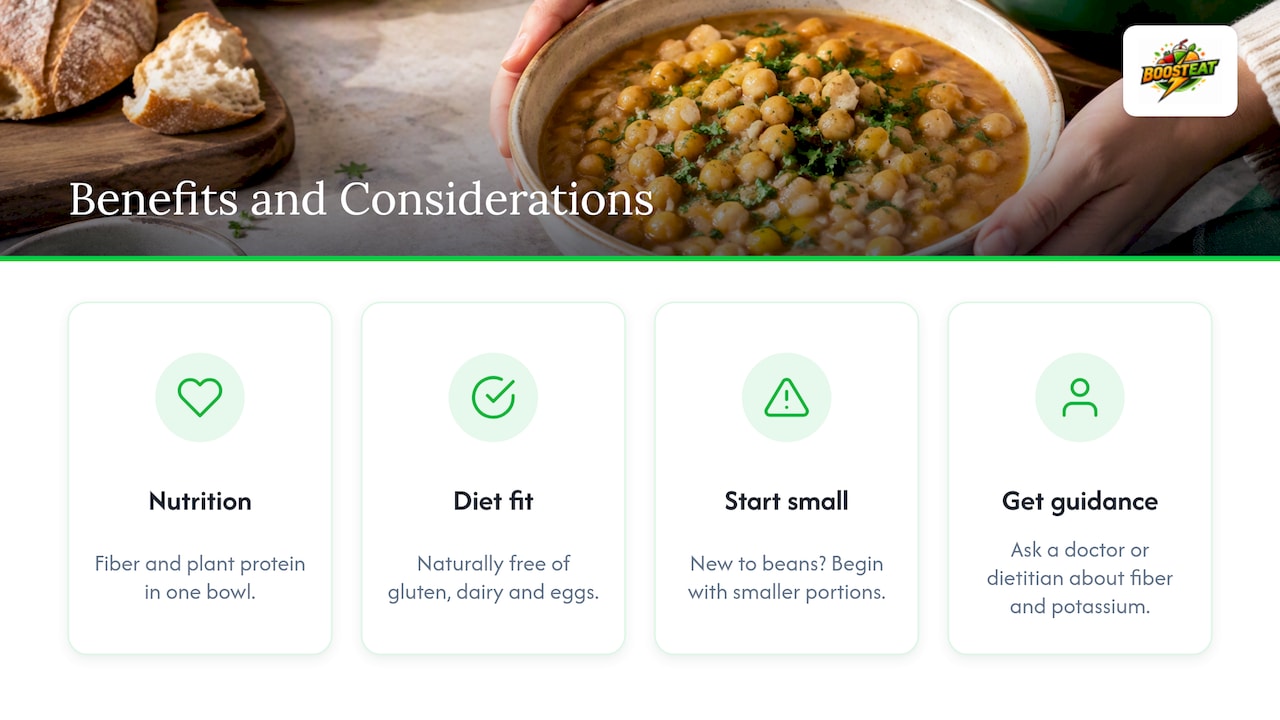
Chickpeas are a pantry staple that gives you fiber and plant protein in the same bowl, and the olive oil and onions make the stew filling enough to serve as a main course. That is useful if you eat vegan, cook for kids or just want inexpensive meals. Because the stew is naturally free of gluten, dairy and eggs, it also suits many dietary needs without substitutions. Check your broth label if you add it.
On the downside, chickpeas can cause gas for people who are not used to eating a lot of fiber. Start with smaller portions if beans are new to you, and rinse canned chickpeas well. If you have a medical condition affecting digestion or kidneys, ask your doctor or a registered dietitian how much legume fiber and potassium suits you.
Our take on revithada
At Boost Eat we cook with wholesome ingredients and aim for recipes that feel doable on a Tuesday night, and revithada fits that brief. It is one of the clearest examples of Greek home cooking: a few cheap ingredients, treated patiently, produce something that tastes far more complex than the ingredient list suggests.
We suggest cooking the dried-chickpea version once, on a weekend, so you learn what the stew should look like. After that, the canned version becomes a weeknight tool. Our one rule is to never skimp on the onions. They are the sweetness in the pot, and no amount of spice makes up for under-cooked ones.
It also keeps a family fed. Children often like the mild, creamy version with a little bread for dipping, and you can scoop out their portion before adding the lemon and pepper.
— Simos – Boost-eat.com Founder
What to serve with Greek chickpea stew
Revithada is a main dish, so keep sides simple:
Crusty bread or warm pita to scoop up the broth. This is the most traditional pairing.
A Greek-style salad of tomato, cucumber, red onion and olives, dressed with olive oil and vinegar.
Olives and pickled vegetables, whose sharpness balances the richness.
Feta and a squeeze of lemon for a non-vegan finish.
Steamed greens, such as horta-style wild greens, chard or spinach, with olive oil and lemon.
For dessert, something cool and light works well. Our Greek yogurt dessert ideas are quick to make while the stew finishes in the oven.
Storing and reheating leftovers
Revithada thickens as it sits, and many cooks say it tastes better the day after. Handle it safely, though. The USDA’s Food Safety and Inspection Service advises that cooked leftovers be refrigerated within 2 hours, and that thawed leftovers be used within 3 to 4 days or refrozen.
In practice:
Cool the stew in shallow containers rather than one deep pot, so it chills faster.
Refrigerate it within 2 hours of cooking and eat it within 3 to 4 days.
Freeze portions in airtight containers if you want to keep it longer, leaving a little space at the top for expansion.
Reheat in a saucepan over medium-low heat with a splash of water or broth, stirring often, until it is steaming hot throughout.
Finish with fresh lemon and a little new olive oil. Both fade during storage.
Make it a habit with Member’s Kitchen
If you like having a reliable rotation of simple, healthy meals, our Member’s Kitchen gives you a place to keep cooking. Subscibe to our website and stay tuned for Boost Eat app with Member’s Kitchen page.

If you would rather keep browsing for free, the Boost Eat homepage has smoothies, snacks and more, and our vegetable smoothie tips pair well with a legume-heavy week of cooking.
FAQ
Do chickpeas go well in stew?
Yes. They hold their shape through long cooking, absorb the flavor of olive oil, onion and herbs, and release starch that thickens the broth naturally. This is why Greek cooks, especially on Sifnos, have long built a whole dish around them.
Do I have to soak dried chickpeas for revithada?
We recommend it. Soaking for 8 to 10 hours shortens the cooking time and helps the chickpeas cook evenly, as dietitians advise. If you forget, use canned chickpeas, which are already cooked.
Is there any downside to eating chickpeas?
The most common problem is gas or bloating, especially if you are not used to high-fiber foods. Introduce them gradually, drink water, and rinse canned chickpeas. People with legume allergies should avoid them, and anyone on a restricted diet for a medical reason should check with their doctor.
Can I make Greek chickpea stew in advance?
Yes, it is a good make-ahead meal. Keep it in the refrigerator for 3 to 4 days or freeze it, then reheat gently with a splash of water and add fresh lemon and herbs just before serving.
Sources
Recommended
General Entertainment & Information Purposes Only. At Boost-Eat.com and our partners we share content for general entertainment and information. It’s not medical, dermatological, nutritional, or fitness advice and shouldn’t replace guidance from a licensed professional. If you’re making health-related decisions, please check with a qualified expert — and know that using this site and its information is at your own discretion.
Discover more from BOOST EAT
Subscribe to get the latest posts sent to your email.

