A good Greek yogurt smoothie needs four things: a thick yogurt base, fruit (frozen works best), a splash of liquid and a blender. Our starting ratio is about ½ cup Greek yogurt, 1 cup frozen fruit, ½ cup milk and one ripe banana, blended until smooth. Add liquid a splash at a time until it pours the way you like. Below you will find that base formula, tested-style recipes from U.S. health institutions, avocado and banana variations, and ways to adapt each blend to your diet.
Key Takeaways
Greek yogurt is a thick base, so the smoothie turns out creamy and filling, but you may need extra liquid to get the blender moving.
Frozen fruit gives a thicker, colder drink than fresh fruit and removes the need for ice.
Avocado and banana both add body. Pair either with yogurt for a smooth, spoonable texture.
Calories, protein and sugar depend mostly on the yogurt type, the milk or juice and any sweetener you add.
You can make most blends vegan, low-FODMAP or without added sugar with a few simple swaps.
Table of Contents
The Base Formula for a Greek Yogurt Smoothie
You do not need a recipe card every morning. You need proportions you can remember. This is the pattern we use as our starting point:
Yogurt: ½ cup plain Greek yogurt.
Fruit: 1 cup frozen fruit, such as berries, mango, peaches or pineapple.
Body: ½ ripe banana or a quarter of an avocado.
Liquid: ½ cup milk or a plant-based milk, adding more as needed.
Optional extras: a teaspoon of honey, a spoonful of oats, nut butter, chia or flax seeds, a pinch of cinnamon or a drop of vanilla.
Put the liquid in the blender first, then the yogurt, then the fruit. The blades catch the liquid right away and you avoid the stuck-air-pocket problem that makes people give up on thick smoothies.
Why Greek yogurt makes it creamy
Greek yogurt is strained, so it is denser than regular yogurt. Government nutrition guidance on building a smoothie lists Greek yogurt among its base options and notes that a thicker base makes a creamier, thicker smoothie, with the caveat that you may need additional liquid to blend it. That is the whole trick: thick base in, a little extra liquid to keep things moving.
How to fix texture
Too thick: add milk, water or juice one tablespoon at a time and blend again.
Too thin: add more frozen fruit, a few frozen banana slices or an extra spoonful of yogurt.
Not smooth enough: blend longer, and cut hard frozen chunks smaller before you start.
Too tart: a little honey, a ripe banana or a few dates will round out the flavor.
Fresh or Frozen Fruit: What Works Best
Both work. Frozen fruit makes a colder, thicker drink with no ice, and it is already cut and ready, which suits busy mornings. Fresh fruit gives a lighter, juicier result, and you can add a handful of ice if you want it cold.
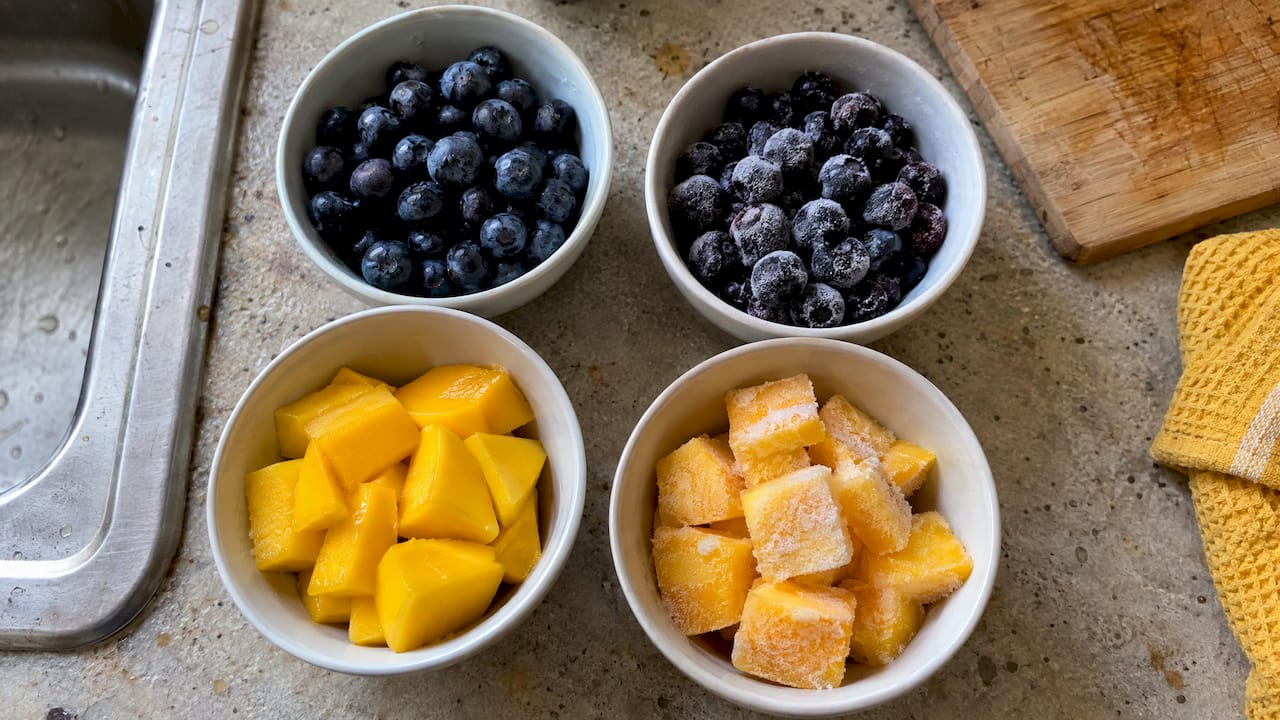
A Washington State University Extension recipe for a fruit yogurt smoothie uses strawberries or other frozen fruit, and suggests variations with frozen peaches, pineapple and other berries. It also advises slightly defrosting the frozen fruit and blending for about 30 to 45 seconds. That short defrost helps a smaller blender cope with rock-hard fruit.
Fruit pairings that taste right with Greek yogurt
| Fruit | Why it works | Good add-ins |
|---|---|---|
| Strawberry and banana | Classic, mild and sweet | Oats, vanilla |
| Blueberry and mango | Tangy and tropical together | Honey, lime |
| Peach | Soft and naturally sweet | Cinnamon, ginger |
| Pineapple | Bright and acidic, balances rich yogurt | Coconut milk, spinach |
| Cherry | Deep flavor, little sweetener needed | Almond extract, cocoa |
| Raspberry | Tart, pairs with banana | Peanut butter, flax |
For a colorful twist on fruit flavors, this blue spirulina smoothie shows how a superfood powder can change the look and taste of a fruit blend. If you like to sip fruit-forward drinks alongside your smoothies, Greek natural fruit juices are another way to bring Mediterranean flavor to the table.
Three Greek Yogurt Fruit Smoothie Recipes
1. Blueberry mango smoothie
The American Heart Association’s Blueberry Mango Smoothie calls for ¾ cup fat-free plain Greek yogurt, ¾ cup fat-free milk, ¾ cup frozen unsweetened blueberries, ¾ cup frozen mango, 1 tablespoon honey and vanilla. Blend until smooth and add milk if it is too thick. It is a good template because every quantity is the same, so it is easy to scale up or down.
2. Strawberry banana smoothie
The Washington State University Extension recipe linked above uses 3 cups strawberries or other frozen fruit, 2 cups fat-free milk, 1 large banana and ¾ cup low-fat yogurt. That is a big batch, so it suits a family or a few jars for the next day. Swapping the yogurt for plain Greek yogurt is our suggestion if you want more thickness, and you may need a bit more milk.
3. Our oat and berry breakfast blend
This is our own quick version for mornings when you want it to hold you until lunch:
½ cup plain Greek yogurt
½ cup milk of your choice
1 ripe banana
½ cup frozen mixed berries
¼ cup rolled oats
1 teaspoon honey, if you like it sweeter
Blend for about a minute. The oats thicken the drink as they sit, so drink it soon after blending or enjoy it with a spoon. If you like the oat idea, our overnight oats guide shows how to take it further.
Avocado Smoothie Recipes That Taste Fresh, Not Heavy
Avocado gives a smoothie a silky, almost milkshake-like body without needing much sweetener. The flavor is mild, so pair it with something bright such as citrus, melon, pineapple or banana. Always use a ripe avocado: an underripe one stays grainy and tastes grassy.
Avocado melon smoothie
Nutrition.gov’s Avocado Melon Breakfast Smoothie makes 2 servings in 5 minutes. You blend 1 large ripe avocado, 1 cup honeydew, 1½ teaspoons lime juice, 1 cup fat-free milk, 1 cup plain fat-free yogurt, ½ cup 100% apple juice and 1 tablespoon honey. The recipe says it can be refrigerated for up to 24 hours and stirred before serving. Using plain Greek yogurt in place of the regular yogurt is an easy swap that makes it thicker.
Avocado banana smoothie
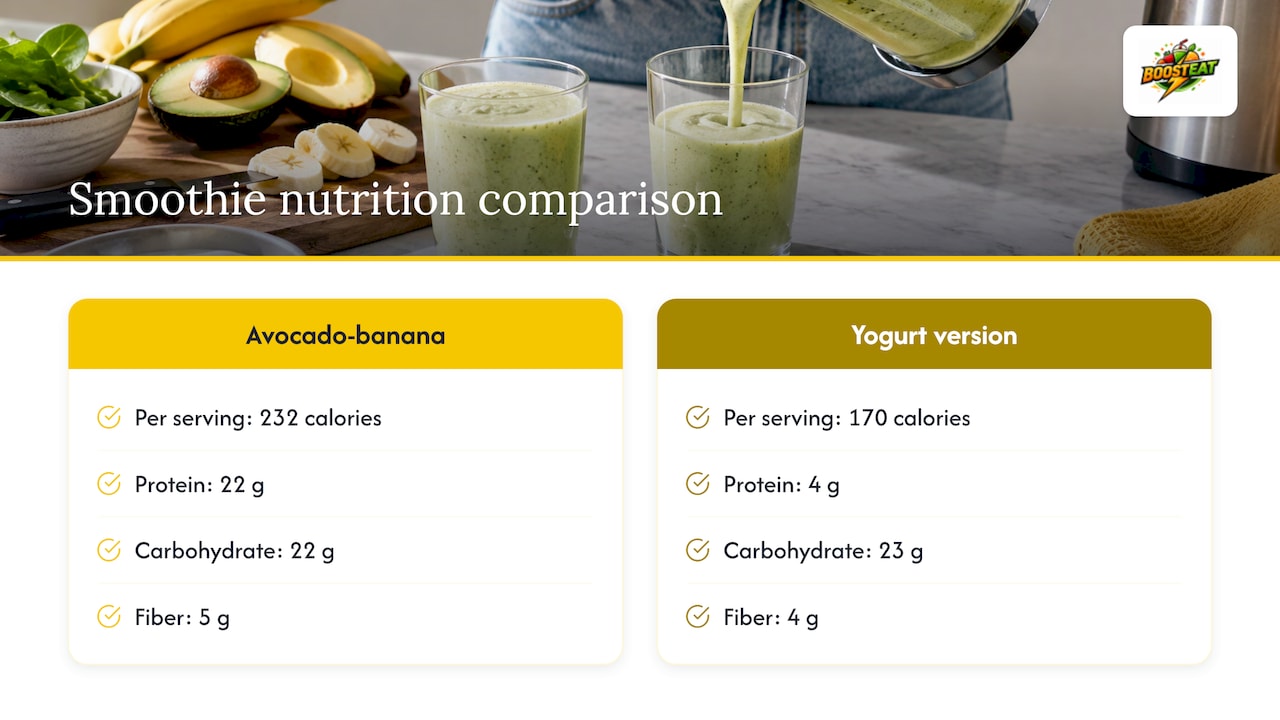
The pairing works because banana adds sweetness and avocado adds creaminess. Diabetes Australia’s Avocado and Banana Smoothie makes 2 servings in 5 minutes from 1 frozen banana, ½ avocado, protein powder, a handful of greens and 1½ cups dairy or plant milk. Blend until smooth and add milk if it is too thick. Its stated nutrition is 232 calories, 22 g protein, 22 g carbohydrate and 5 g fiber per serving.
If you want a yogurt version, the American Heart Association’s Avocado-Banana-Orange-Yogurt Smoothie makes 4 servings from 1 avocado, ½ banana, 1½ cups orange juice, 6 ounces low-fat vanilla yogurt and 1 cup ice. Its stated nutrition per serving is 170 calories, 4 g protein, 23 g carbohydrate, 4 g fiber and 16 g sugar. It is a lighter, juicier option, and a good one to pour for a group.
A healthy avocado smoothie with Greek yogurt
Here is our own simple formula for a green, creamy blend:
½ ripe avocado
½ cup plain Greek yogurt
1 frozen banana
1 large handful of baby spinach
¾ cup milk or plant milk
Squeeze of lime
Blend the spinach and liquid first, then add the rest. The banana and lime hide any bitterness, so even picky eaters usually enjoy it. For more ideas in this direction, read our vegetable smoothie tips.
Adapting Your Smoothie to Your Diet
Yogurt smoothies are flexible, which is one reason families return to them. Here is how we adjust them.
Without added sugar
Rely on ripe banana, mango or cherries for sweetness.
Choose plain yogurt rather than vanilla or fruit-flavored versions, which often carry added sugar.
Use unsweetened frozen fruit and unsweetened milk, as in the Blueberry Mango recipe above that specifies unsweetened blueberries.
Skip juice and use milk or water as your liquid, since juice adds sugar to the glass.
Taste before you sweeten. Most blends need less than you expect once the fruit is fully blended.
Vegan and dairy-free
Use a plain unsweetened plant-based yogurt made from soy, coconut or almond, and a plant milk. Soy-based yogurts tend to be thickest, and a spoonful of nut butter or half an avocado brings back some of the creaminess you lose without Greek yogurt. If you swap, check the label for added sugar.
Gluten-free
The fruit, yogurt and avocado in these blends contain no gluten on their own. If you add oats, choose oats labeled gluten-free, and check any protein powder label.
Sensitive digestion
Some fruits and dairy products are harder to digest for people who follow a low-FODMAP plan. Our guide to low FODMAP smoothies covers ingredients and recipes. If you have a medical condition, an allergy or a diet prescribed by a clinician, ask your doctor or a registered dietitian which yogurts and fruits suit you.
Protein boosts
Greek yogurt already brings protein. If you need more, such as after a workout, a scoop of protein powder or a spoonful of peanut butter works, as the Diabetes Australia recipe above shows with protein powder. Plant-based powders and blended greens can also round out a blend. A plant super blend is one way to add daily greens to a smoothie.
What Affects Calories, Protein and Sugar
A smoothie is only as light or as rich as what goes in it. The same pattern holds across the recipes above, which range from a stated 170 calories per serving in the American Heart Association yogurt-avocado blend to 232 calories in the Diabetes Australia version with protein powder. The main drivers are:
Yogurt type: fat-free, low-fat and whole-milk versions differ in calories, and plain versus flavored yogurt changes the sugar.
Liquid: juice adds sugar, while milk adds protein, and water adds neither.
Fruit quantity: more fruit means more natural sugar and more fiber.
Fats: avocado, nut butter and seeds add calories along with fiber and healthy fats.
Sweeteners: honey and syrups raise sugar quickly. A tablespoon is plenty.
Serving size: recipes serving 2 or 4 look very different if you drink the whole batch yourself.
Check the nutrition panel on your yogurt and milk, and measure ingredients the first few times. After that you will know by sight.
Make It Ahead and Store It
Smoothies taste best right after blending, but you can prepare them in advance. Portion yogurt, fruit and avocado-free ingredients into freezer bags, then blend with liquid in the morning. The Nutrition.gov avocado recipe says its smoothie can be kept in the refrigerator for up to 24 hours and stirred before serving. For batching tips, see our guide to smoothie meal prep. If you have leftover yogurt and fruit, our Greek yogurt dessert ideas put them to good use.
Our Perspective
At Boost Eat we believe a smoothie should be a simple habit, not a project. Greek yogurt is one of the easiest ways to make a blend creamy, filling and adaptable, and it works with the way our readers live: fast mornings, family snacks, and diets that vary from one person at the table to the next.
That is why our recipes lean on wholesome ingredients and simple proportions. Once you know the pattern of yogurt, fruit, body and liquid, you can make it vegan, gluten-free, lower in sugar or lower in calories without starting over.
Greek food has shaped how we think about this. Yogurt, honey, fruit and nuts have always sat together on Greek tables, so a smoothie that combines them feels familiar rather than trendy. We want you to enjoy making it, and to feel good about what you pour into the glass.
Simos Boost-eat.com Founder
Get More Recipes Every Week
If you want more smoothies, snacks and Greek recipes in one place, our Member’s Kitchen is built for that. You can subscribe to our website here and get updates about Boost Eat App that will help you create meal plans with our delicious recipes, track calories, nutrition and macro information.
You can also browse everything we publish on the Boost Eat homepage, from smoothies and milkshakes to salads and pastry.
FAQ
Can I use regular yogurt instead of Greek yogurt?
Yes. Regular yogurt blends well and several institutional recipes above use plain or low-fat yogurt. The smoothie will just be thinner, so use less milk or add more frozen fruit to compensate.
Should I use fresh or frozen fruit?
Frozen fruit makes a thicker, colder smoothie without ice, and it saves prep time. Fresh fruit gives a lighter result, so add a few ice cubes if you want it chilled. If the fruit is frozen solid, let it defrost slightly before blending, as the Washington State University Extension recipe suggests.
How do I keep an avocado smoothie from turning brown or bitter?
Blend it right before drinking and add a little lime or lemon juice. If you store it, keep it covered in the refrigerator and stir before serving. The Nutrition.gov avocado recipe says it keeps for up to 24 hours this way.
Can I make a Greek yogurt smoothie without sugar?
Yes. Use plain yogurt, unsweetened milk and ripe fruit such as banana or mango, and leave out honey and juice. Taste first, since most blends are sweet enough on their own.
Is a Greek yogurt smoothie a full meal?
It can be when you add body and fiber, such as oats, nut butter, chia seeds or avocado. Yogurt contributes protein, and those extras help it hold you for longer. For individual dietary needs, a registered dietitian can advise on portions.
Sources
Fruit Yogurt Smoothie, Washington State University Extension
Avocado-Banana-Orange-Yogurt Smoothie, American Heart Association
Recommended
General Entertainment & Information Purposes Only.
At Boost-Eat.com and our partners we share content for general entertainment and information. It’s not medical, dermatological, nutritional, or fitness advice and shouldn’t replace guidance from a licensed professional. If you’re making health-related decisions, please check with a qualified expert — and know that using this site and its information is at your own discretion.
Discover more from BOOST EAT
Subscribe to get the latest posts sent to your email.

