
Chicken souvlaki is small pieces of chicken marinated in olive oil, lemon, garlic and oregano, threaded onto skewers and grilled until browned outside and juicy inside. You can make it in one afternoon with pantry staples. Cut the chicken evenly, marinate it for at least 30 minutes (2 hours is better), grill over medium-high heat and pull it off at 165°F (74°C).
This guide gives you a reliable base recipe, the marinade variations worth knowing, the grilling method, doneness and food safety, and what to put on the plate so it feels like a real Greek meal.
Key Takeaways
The classic marinade is olive oil, lemon juice, garlic and dried oregano. Everything else, from honey to yogurt, is a variation.
Marinate for 2 hours in the refrigerator for dependable flavor. Do not go past 24 hours, because the lemon can turn the texture soft.
Cut the chicken into even 1 to 1½ inch pieces and leave a little space on the skewer so the pieces brown instead of steam.
Cook to 165°F (74°C) and check with a food thermometer, because color is not a reliable sign of doneness.
Souvlaki is skewered pieces of meat. Gyros are meat shaved from a vertical rotating spit.
Table of Contents
What Chicken Souvlaki Is (and What Makes It Greek)
Souvlaki is marinated meat, sometimes vegetables, threaded onto skewers and cooked over fire. The word comes from the Greek for a spit or skewer. Pork is very common in Greece, but chicken is the version most people in the US order and cook, and it is the easiest to get right at home.
The flavor profile is simple on purpose: good olive oil, bright lemon, garlic and oregano. There is no sauce cooked into it and no long ingredient list. The char from the grill does the rest.
How it is served depends on where you are. According to The Guardian’s souvlaki guide, in northern Greece souvlaki may arrive as skewers alone, while Athens and southern Greece commonly serve it wrapped in pita with salad and sauces. Both are authentic, so you can serve it either way at home.
Charcoal is the traditional benchmark. The same Guardian piece notes that a smoking-hot griddle is the most practical indoor substitute, and that skewers help produce both browning and juicy interiors.
Souvlaki vs. Gyros
This is the question people ask most often at the restaurant counter. Allrecipes explains the difference this way: chicken souvlaki is marinated pieces cooked on individual skewers, while gyros are seasoned meat layered on a vertical rotating spit and shaved into slices.
| Chicken souvlaki | Gyros | |
|---|---|---|
| Cut of meat | Small pieces, threaded on skewers | Stacked meat, shaved into slices |
| Cooking method | Grill or griddle, turned by hand | Vertical rotating spit |
| Made at home? | Easy, needs only skewers and a grill or pan | Hard without special equipment |
| Typical serving | On skewers or in pita | Almost always in pita |
That last row of the table is why souvlaki is the home cook’s favorite. You do not need a spit to make it.
Ingredients for Classic Chicken Souvlaki
Here is a straightforward base that serves four. It follows the proportions in a widely used Allrecipes version, which uses 1½ pounds of boneless, skinless chicken, ¼ cup olive oil, 2 garlic cloves, 2 tablespoons lemon juice, 1 teaspoon dried oregano and ½ teaspoon salt.
1½ pounds boneless, skinless chicken (thighs stay juiciest, breasts work if you watch the time)
¼ cup olive oil
2 garlic cloves, minced
2 tablespoons lemon juice
1 teaspoon dried oregano
½ teaspoon salt
Black pepper, to taste
Wooden or metal skewers
If you want a bigger batch for guests, Once Upon a Chef’s version for 4 to 6 servings scales up to 2 pounds of chicken, 6 tablespoons of olive oil, 4 large garlic cloves, 2 teaspoons of oregano, 1 teaspoon of honey, 1½ teaspoons of salt, ½ teaspoon of pepper and 1 tablespoon of lemon zest. It shows that honey and zest can sit alongside the core flavors without changing the method.
If you like to browse other restaurant-inspired dishes by cuisine, this big chicken recipe collection is a handy place to compare ideas before you shop.
Thighs or breasts?
Thighs have more fat and forgive a minute or two of overcooking. Breasts are leaner and cook fast, so cut them a little larger and watch them closely. Whichever you choose, trim visible fat and cut pieces to the same size so they finish together.
Souvlaki Marinade: The Core and the Variations
The classic souvlaki marinade is olive oil, lemon juice, garlic and dried oregano, as Delish describes it. Every other version is built on that foundation. Once you know the core, you can pick the variation that suits your pantry and your taste.
Red wine vinegar and fresh herbs
Serious Eats uses a dressing of lemon juice, red wine vinegar, olive oil, fresh oregano, salt, black pepper and grated garlic, and rests the chicken for about 2 hours so the flavor gets in. Vinegar adds a sharper, more tangy edge.
Yogurt marinades
Yogurt keeps chicken tender and gives a gentle tang. The New York Times recipe calls for ¾ cup Greek yogurt, ¼ cup olive oil, 1 tablespoon garlic, rosemary or thyme, oregano, ½ teaspoon cumin, salt, pepper and a lemon, with at least 2 hours of marinating. A lighter yogurt option from Carol the Greek uses ¼ cup Greek yogurt, lemon zest, 1 tablespoon olive oil, salt, 2 teaspoons oregano and 1 teaspoon thyme, and she recommends at least 8 hours or overnight.
Why the timing differs
You will see marinating times from 30 minutes to overnight. Delish says to marinate at room temperature for 30 minutes or covered in the refrigerator for up to 24 hours. Silk Road Recipes suggests at least 45 minutes and no longer than overnight, warning that too long turns the meat mushy. The Forked Spoon agrees: at least 1 hour, up to overnight, and not past 24 hours because lemon juice can affect the chicken’s texture.
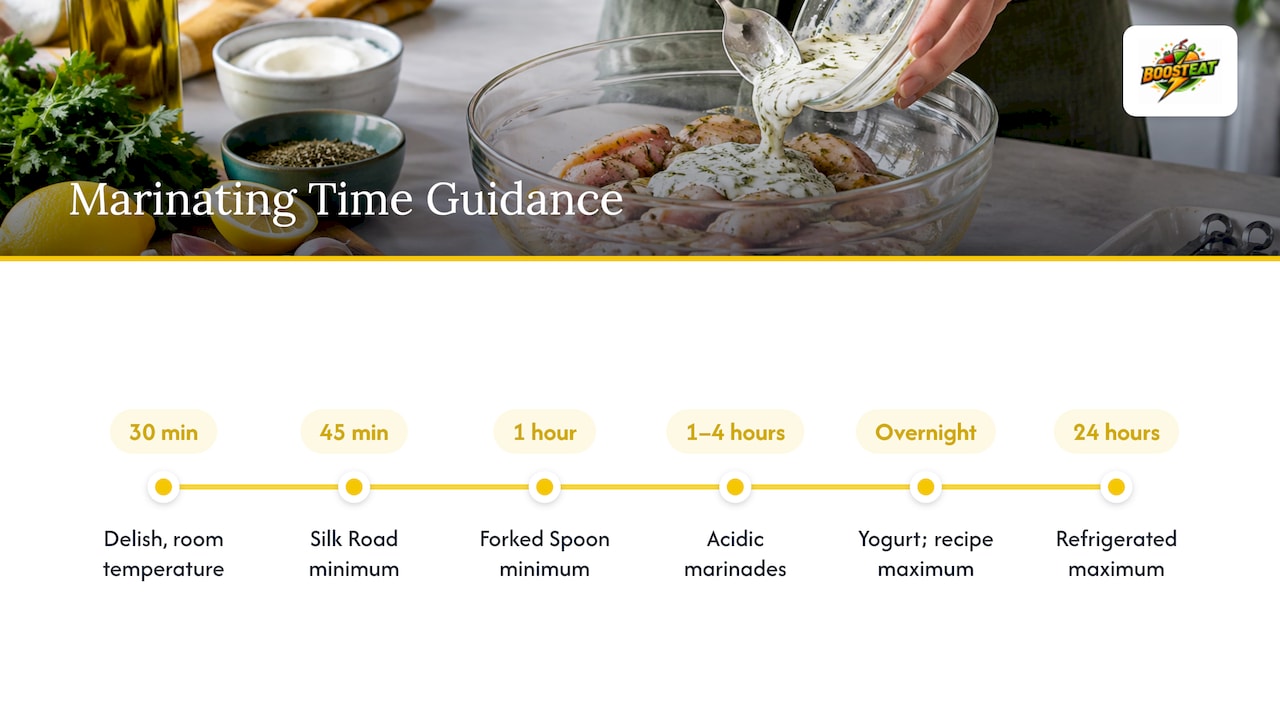
A practical rule: acidic marinades (lots of lemon or vinegar) get 1 to 4 hours, while gentler yogurt marinades can go overnight.
How to Make Chicken Souvlaki Step by Step
Cut the chicken. Aim for similarly sized pieces about 1 to 1½ inches, as The Forked Spoon recommends, so every piece cooks at the same speed.
Mix the marinade. Whisk the olive oil, lemon juice, garlic, oregano, salt and pepper in a bowl or zip-top bag.
Marinate in the refrigerator. Toss the chicken, cover and chill. The FDA advises marinating food in the refrigerator, not on the counter.
Soak wooden skewers. Allrecipes suggests about 15 minutes in cold water, while The Forked Spoon says at least 30 minutes. Longer is safe, and it keeps the wood from burning.
Thread the chicken. Leave a little space between pieces. Crowded skewers steam and cook unevenly.
Discard the leftover marinade. Do not reuse marinade that touched raw chicken as a sauce.
Grill. Cook over medium-high heat, turning to brown on all sides.
Rest for a few minutes before serving so the juices settle.
Grilling times and heat
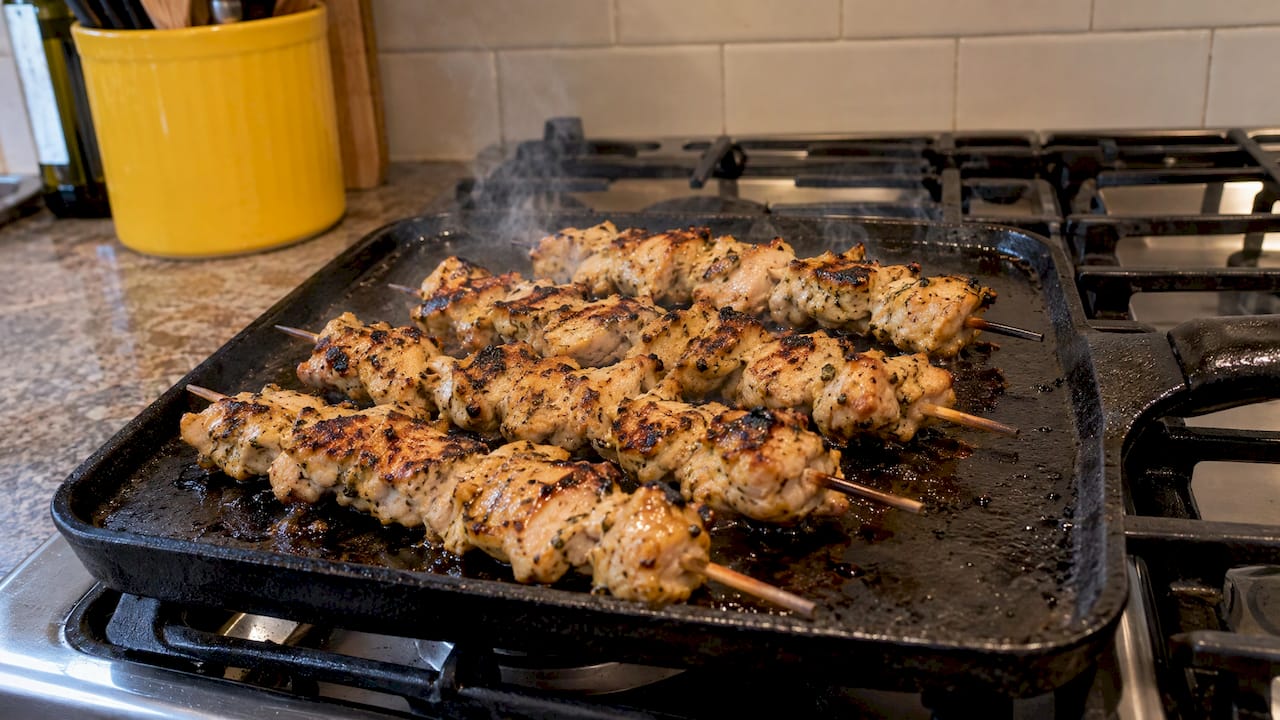
Times vary by pan, grill and piece size, so treat them as a range and let the thermometer decide. The Forked Spoon turns skewers every 2 to 3 minutes for 8 to 10 minutes. Once Upon a Chef grills with the lid covered for 5 to 7 minutes total. If you cook indoors, use a very hot griddle or cast-iron pan and work in batches so the pan does not cool down.
Is the Chicken Done? Food Safety
The safe target is 165°F (74°C). The U.S. FDA says chicken parts should reach 165°F and that color and texture are unreliable indicators, so a food thermometer is the dependable way to check. Slide the probe into the thickest piece on the skewer, not touching the wood or metal.
Two more points from the same FDA guidance matter for cookouts:
Do not leave perishable food in the 40 to 140°F danger zone for more than 2 hours, or 1 hour when it is above 90°F outside.
Marinate in the refrigerator, and keep raw chicken and cooked skewers on separate plates and boards.
What to Serve With Chicken Souvlaki
A souvlaki plate in a Greek restaurant is typically built from a few simple pieces. According to Unfolding Greece, a platter usually has three skewers of meat, sliced onions and tomatoes, french fries and warm pita.
At home, The Forked Spoon suggests Greek salad, Greek lemon potatoes, grilled vegetables, Mediterranean orzo salad and warm pita. You do not need all of them. A good plate has one fresh element, one starch and one sauce.
Fresh: a Greek salad of tomato, cucumber, red onion, olives and feta.
Starch: warm pita, lemon potatoes or orzo.
Sauce: tzatziki, the cool cucumber-garlic yogurt sauce that most cooks serve with souvlaki.
Extras: grilled peppers, zucchini or onions, cooked on the same grill.
If you enjoy making a plate look as good as it tastes, these vibrant food presentation examples show how color and contrast can lift even a simple meal.
Want more Greek dishes for the same table? Our Greek gemista recipe and revithada chickpea stew are good partners. Add a bowl of our homemade hummus for dipping, and finish with a quick Greek yogurt dessert.
Is Chicken Souvlaki Healthy?
It can be a very good choice. The core of the dish is lean protein, olive oil, lemon, garlic and herbs, cooked on a grill without breading or deep frying. That is a wholesome starting point for a balanced dinner.
What changes the nutrition is the plate around it. Calorie counts you see online for a “chicken souvlaki dinner” differ a lot because recipes, portions and sides differ. Skewers with salad and a modest spoonful of tzatziki make a lighter meal than a platter with fries, a large pita and extra sauce.
A few easy ways to keep it light and filling:
Choose breast meat, or trim thighs well, if you want less fat.
Measure the olive oil in the marinade instead of pouring it.
Fill half the plate with salad or grilled vegetables.
Use a smaller pita, or skip it and add a scoop of orzo or lemon potatoes instead.
Pick plain Greek yogurt for the tzatziki. It also fits a sugar-free approach.
If you track your food intake, calculate the nutrition for your own recipe and portion instead of relying on generic values. We developed the Boost Eat app, where you can create a weekly meal plan using our recipes, and monitor your weight, calorie intake, nutrition, and macronutrient progress.
Our Perspective
We think souvlaki is one of the best examples of what Greek home cooking does well: a handful of honest ingredients, a short method and a result that feels like a feast.
It also fits the way our readers live. Busy professionals can marinate in the morning and grill in the evening. Parents can thread kid-friendly skewers with smaller pieces. Anyone cooking gluten-free or lower-calorie can build the plate around salad and vegetables without losing the flavor.
Our advice is to master the basic lemon, garlic and oregano marinade first, then change one thing at a time: a spoonful of yogurt, a pinch of paprika, a splash of vinegar. You will quickly learn what your family likes, and you will never need a bottled marinade again.
Simos Boost-eat.com Founder
Cook More Greek Recipes With Boost Eat
If you want a steady supply of simple, wholesome recipes like this one, our Member’s Kitchen is built for home cooks. You can join the Member’s Kitchen whenever you are ready.

Prefer to browse first? Our Boost Eat homepage brings together smoothies, snacks, salads and Greek dishes. For a quick breakfast to go with your busy week, try our overnight oats guide.
Tips for Juicy Skewers Every Time
Pat the chicken dry before it hits the grill so it browns instead of steaming.
Do not overcook. Pull the skewers at 165°F (74°C) and rest them briefly.
Oil the grates or the pan lightly so the pieces release cleanly.
Keep the heat high enough for char but not so high that the outside burns before the inside cooks.
Cut evenly. Uneven pieces are the most common reason one skewer is dry and the next undercooked.
Make a double batch. Cooked skewers keep well in the refrigerator for lunches, and you can slide the chicken into pita or onto a salad.
FAQ
How long should I marinate chicken souvlaki?
Two hours in the refrigerator is a reliable sweet spot for a lemon, oil, garlic and oregano marinade. You can go as short as 30 minutes or as long as overnight. Avoid going beyond 24 hours, because the acid can make the chicken mushy.
What is the difference between souvlaki and gyros?
Souvlaki is marinated pieces of meat cooked on individual skewers. Gyros are seasoned meat stacked on a vertical rotating spit and shaved into slices. At home, souvlaki is far easier to make.
What is a souvlaki plate?
A restaurant souvlaki plate typically includes skewers of meat, sliced onions and tomatoes, fries and warm pita. At home, many cooks swap the fries for Greek salad, lemon potatoes or orzo, and add tzatziki on the side.
Can I make chicken souvlaki without a grill?
Yes. A very hot griddle or cast-iron pan is the best indoor substitute for charcoal. Cook in batches and turn the skewers often, then confirm 165°F (74°C) with a food thermometer.
Sources
Allrecipes: What Is Souvlaki and how is it different from a gyro
Serious Eats: Chicken Souvlaki With Tzatziki Sauce and Greek Salad
Recommended
General Entertainment & Information Purposes Only.
At Boost-Eat.com and our partners we share content for general entertainment and information. It’s not medical, dermatological, nutritional, or fitness advice and shouldn’t replace guidance from a licensed professional. If you’re making health-related decisions, please check with a qualified expert — and know that using this site and its information is at your own discretion.
Discover more from BOOST EAT
Subscribe to get the latest posts sent to your email.

