
Greek zucchini fritters, called kolokithokeftedes, are made from grated zucchini, feta, scallions and plenty of fresh dill and mint, bound with egg and a little flour, then pan-fried until golden. The secret to a crisp fritter is to salt and squeeze the zucchini until it is properly dry. The second is to fry in hot oil right after mixing. Below you will find our full recipe, the reasoning behind each step, gluten-free and lighter variations, what to serve alongside and how to store leftovers.
Key Takeaways
Salt the grated zucchini, rest it, then squeeze it hard in a clean towel. This one step decides whether the fritters are crisp or soggy.
Fresh dill and fresh mint, plus good feta, are what make the flavor taste Greek.
Fry as soon as the batter is mixed, in hot oil, so the fritters crisp immediately instead of soaking up oil.
Chickpea flour or a gluten-free blend works well for a gluten-free version, and baking gives a lighter result.
Cooked fritters freeze well, so a double batch is an easy make-ahead snack or lunch.
Table of Contents
What are kolokithokeftedes?
The name combines kolokithi (zucchini) with keftedes, the Greek word for meatball-style patties. So the dish is literally zucchini balls or patties. According to Tasting Table, they come from Crete and combine grated zucchini, herbs, aromatics and feta, held together with eggs, flour and breadcrumbs, then fried until golden. The result is a crisp outside and a tender, fresh-tasting inside.
The herbs are central. Saveur notes that Cretan cooks lean on the island’s wild herbs more than on spices, and that is exactly how these fritters taste: green, bright and savory rather than spicy. You will see the same dish called zucchini patties, zucchini balls or courgette fritters, and in Greek tavernas it is a classic meze, served with something cold to drink and something creamy to dip.
At Boost Eat we love them because they fit how many of our readers cook: a pile of vegetables, a handful of herbs, ready in under an hour, and good warm or at room temperature. They suit a light dinner, a lunchbox, a party platter or a toddler-friendly finger food (more on that below).
Ingredients for about 14 fritters
This is our base recipe. It serves 4 as a light main or 6 as a meze.
1 lb (450 g) zucchini, about 2 to 3 medium
1 teaspoon kosher salt, for draining, plus a pinch for the batter
3 scallions, thinly sliced
1/4 cup finely chopped fresh dill
2 tablespoons finely chopped fresh mint
4 oz (115 g) feta, crumbled
2 large eggs
3/4 cup (about 95 g) all-purpose flour, plus a spoonful extra if needed
Freshly ground black pepper
Olive oil for frying, a few tablespoons
Optional: a pinch of nutmeg, a little grated onion, or a tablespoon of breadcrumbs for extra structure.
Recipes vary widely, which is part of the charm. Some use only scallions, some add a grated onion, some add parsley or oregano, and some rely on breadcrumbs rather than flour. The proportions above sit in the middle of that range and give a fritter that holds together without tasting floury.
Choosing the zucchini and the feta
Pick medium or small, firm, bright green zucchini. Smaller ones have fewer seeds and less water, and there is no need to peel them. The peel adds color and a little texture.

For the feta, choose a block packed in brine, ideally made from sheep’s milk or a sheep and goat blend, rather than pre-crumbled cheese. Its saltiness and creaminess carry a lot of the flavor, so it is worth buying a good one. Because feta is salty, go easy on the salt in the batter and taste the mixture before you add more.
Why fresh herbs matter
Fresh mint and dill are the signature pairing. Dried mint tastes quite different, more like tea or a dried spice blend, so keep the fresh for this dish. If you want to add dried oregano or thyme, use a small pinch alongside the fresh herbs, never instead of them.
How to make Greek zucchini fritters, step by step
Grate and salt. Grate the zucchini on the large holes of a box grater. Toss it with 1 teaspoon of salt in a colander set over a bowl.
Rest. Let it sit for 15 to 30 minutes. The salt draws water out of the zucchini.
Squeeze. Press the zucchini against the colander with a spatula, then wrap it in a clean kitchen towel or cheesecloth and twist hard. Keep going until almost no liquid comes out. Zucchini holds a lot of water, and it is the main reason fritters turn out soggy or need too much flour.
Mix. In a large bowl, combine the squeezed zucchini, scallions, dill, mint, feta, eggs and pepper. Stir in the flour gently, just until combined. Overmixing makes the fritters dense.
Check the texture. The batter should be thick and sticky and hold its shape when dropped from a spoon. If it is loose, add flour one tablespoon at a time. If you have time, chill the bowl for 20 to 30 minutes, which helps the fritters keep their shape.
Heat the oil. Warm a thin layer of olive oil in a heavy skillet over medium-high heat until it shimmers. The oil must be hot when the batter goes in, or the fritters absorb oil and turn soft.
Fry. Drop in heaped tablespoons and flatten gently into small patties, leaving about an inch between them. Serious Eats cooks them about 3 minutes on the first side and about 2 more minutes on the second, until golden brown. Do not crowd the pan.
Drain. Move the fritters to a rack or paper towels. Add a little more oil between batches if the pan looks dry.
Fry a test fritter first. If it falls apart, stir in a spoonful of flour. If it is dense and heavy, you may have added too much already, so loosen the remaining batter with a little extra crumbled feta or an extra egg yolk only if you must. Most of the time the cure is simply better squeezing next time.
Which oil to use
Greek cooks often fry in olive oil. Paliria notes that olive oil’s relatively high smoke point suits Greek frying and gives dishes like kolokithokeftedes a crisp, golden crust. Extra-virgin olive oil gives the best flavor. If you find the result slightly heavy, use half olive oil and half a neutral oil such as sunflower, which keeps the flavor and lightens the crunch. Whichever you choose, keep the heat at medium-high, not smoking.
Troubleshooting: fix common fritter problems
| Problem | Likely cause | Fix |
|---|---|---|
| Soggy, limp fritters | Zucchini not squeezed enough, or oil not hot enough | Squeeze in a towel until dry, and wait for the oil to shimmer |
| Fritters fall apart in the pan | Batter too wet | Add flour a tablespoon at a time, chill the batter, and flip only once |
| Dark outside, raw middle | Heat too high or patties too thick | Lower the heat slightly and flatten the patties to about 1/2 inch |
| Heavy and greasy | Oil too cool, pan crowded | Fry fewer at a time and let the oil recover between batches |
| Bland taste | Too few herbs, weak feta | Add more fresh dill and mint, and use a flavorful block feta |
| Too salty | Salted zucchini plus salty feta | Rinse the zucchini briefly after salting, or reduce the feta |
A note on timing: mix the batter right before frying. Salt keeps drawing moisture out of the vegetables, so a batter that waits on the counter gets wetter and wetter. Chilling is fine for a short rest, but do not leave it for hours.
Variations: gluten-free, lighter and egg-free
Gluten-free
Swap the all-purpose flour for a gluten-free all-purpose blend, chickpea flour (besan), rice flour or cornstarch. Chickpea flour adds a pleasant nutty note and binds well. If your recipe includes breadcrumbs, use gluten-free ones or leave them out. Check labels, and use certified gluten-free products if anyone at the table has celiac disease.
Baked
For less oil, bake on a parchment-lined sheet at 400°F (200°C) for 20 to 25 minutes, flipping halfway. Brush or spray the tops with olive oil first. Baked fritters are softer and less crisp than fried ones, but they are easier to make in a big batch.
Lighter, dairy-free or vegan
The feta can be omitted for a lighter version, and the fritters stay flavorful as long as the herbs are generous. For a vegan version, replace the eggs with a flax or chia “egg” (one tablespoon of ground seeds stirred into three tablespoons of water per egg), use chickpea flour, and add a little lemon zest and extra salt to make up for the missing cheese. Expect a more delicate fritter that is best baked or pan-fried over slightly lower heat.
For little ones
Make the fritters small, reduce the salt and skip any added salt in the batter if the feta is salty enough. They are soft inside, easy to hold and a good way to introduce green vegetables. Serve them with plain yogurt. For more kid-friendly ideas, our Greek yogurt dessert ideas show how versatile yogurt can be across the meal.
What to serve with Greek zucchini fritters
The classic partner is tzatziki, the cool yogurt, cucumber and garlic dip. A bowl of plain thick yogurt with lemon zest and a drizzle of olive oil works just as well. Beyond the dip, you have many options:
A Greek salad. Tomato, cucumber, red onion, olives and more feta make a fresh counterpoint to the fried fritters.
A meze spread. Add hummus, olives, warm pita and roasted peppers. Our hummus recipe with tips and variations fits right in, and if you want to widen the table, these cookable mezze recipes give you more dips and small plates with timing and plating ideas.
Bowls. Tuck two or three fritters into a grain bowl with greens and chickpeas, and finish with one of these light sauces for bowls for texture and protein.
A bigger Greek dinner. Serve alongside our gemista, classic stuffed vegetables or a pot of revithada, Greek chickpea stew.
A sandwich or pita. Stuff warm fritters in a pita with yogurt sauce, tomato and lettuce for a quick lunch.
A squeeze of lemon over the hot fritters brightens everything. Serve them warm or at room temperature, which is how they often appear on a meze table.
Storing, freezing and reheating
Let the fritters cool, then keep them in an airtight container in the refrigerator and eat them within a few days. Reheat them in a hot oven or air fryer until warmed through and crisp again. The microwave works in a pinch but softens the crust.
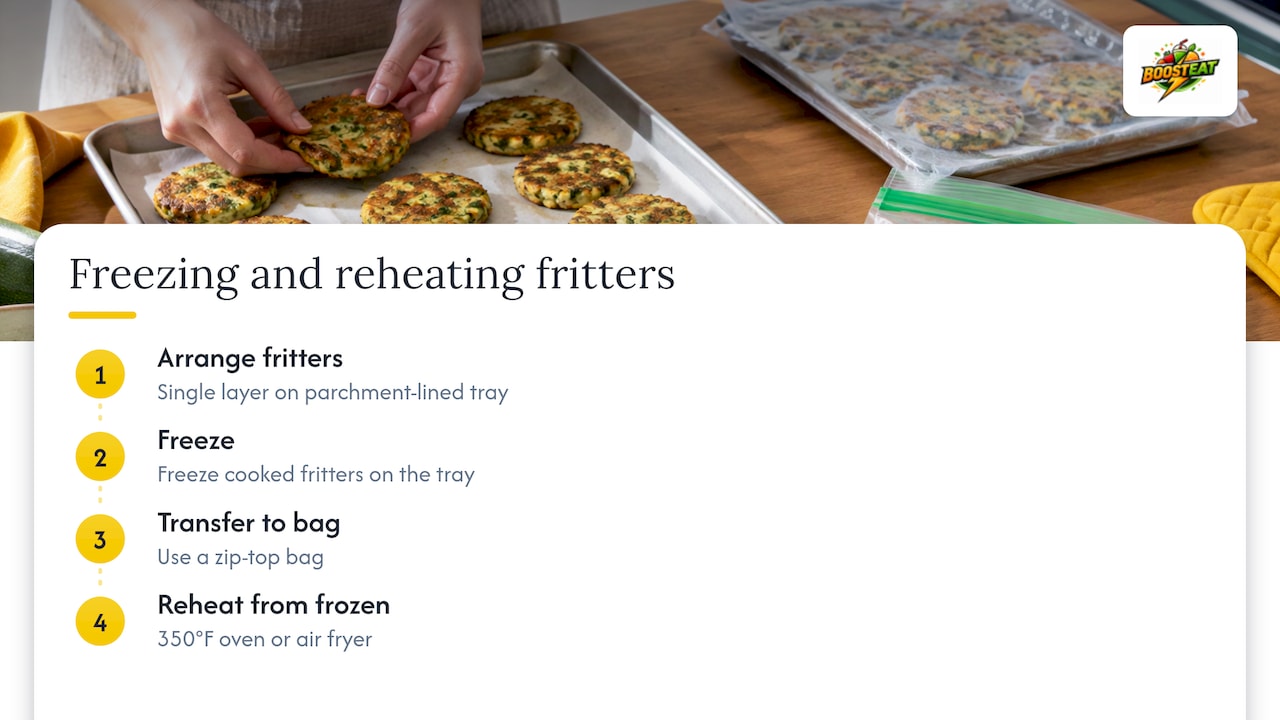
To freeze, follow the method Serious Eats recommends: arrange cooked fritters in a single layer on a parchment-lined sheet tray, freeze, then transfer them to a zip-top bag. Reheat from frozen in a 350°F (175°C) oven or in an air fryer. Freezing them separately first stops them from sticking into one block.
Our perspective
We think kolokithokeftedes are one of the best examples of how Greek home cooking makes vegetables exciting without making them complicated. A bowl of grated zucchini, a bunch of herbs and a piece of feta become a dish people ask for again.
At Boost Eat we focus on wholesome ingredients, convenience and simplicity, and these fritters check every box. They adapt easily to gluten-free, lighter and vegan needs, they can be made ahead, and they work for the whole family, from busy weeknights to a table full of guests.
Our advice is simple: do not rush the squeezing, use fresh herbs generously, and make a double batch. Freeze half, and you have a healthy, ready-made snack for the next busy day.
Simos Boost-eat.com Founder
Cook more Greek recipes with Boost Eat
If you enjoy cooking Greek food at home, our Member’s Kitchen gives you a place to keep exploring easy, wholesome recipes. You can subscribe to join the Member’s Kitchen or browse the free recipes limited access on the Boost Eat homepage.
For lighter drinks to go with your meal, our vegetable smoothie tips are a good next stop.
FAQ
Why are my zucchini fritters soggy?
Usually the zucchini still holds too much water, or the oil was not hot enough. Salt the zucchini, rest it, and squeeze it in a clean towel until almost no liquid comes out. Then fry in oil that is shimmering, and fry the batter right after mixing.
What is the difference between kolokithokeftedes and other zucchini fritters?
The Greek version is defined by fresh dill and mint, scallions and feta, and often a little olive oil for frying. Other styles may use cheddar, Parmesan, corn or spices such as cumin. The herb-forward, feta-tangy flavor is what makes these taste Greek.
Can I make Greek zucchini fritters ahead of time?
Yes. Fry them, cool them and keep them in the refrigerator for a few days, or freeze them on a tray and then bag them. Reheat in a hot oven or air fryer until crisp. Do not make the batter far ahead, because it gets watery as it sits.
Can I make them without flour or eggs?
Yes, with adjustments. Chickpea flour or a gluten-free blend replaces wheat flour, and a flax or chia mixture can stand in for eggs. The fritters will be more delicate, so bake them or fry them gently and flip only once.
Should I peel the zucchini?
No. The peel is tender, adds color and holds the grated shreds together. Just wash the zucchini, trim the ends and grate. If your zucchini are very large with big seeds, scrape out the seedy center first, since the seeds carry extra water.
Sources
Recommended
General Entertainment & Information Purposes Only.
At Boost-Eat.com and our partners we share content for general entertainment and information. It’s not medical, dermatological, nutritional, or fitness advice and shouldn’t replace guidance from a licensed professional. If you’re making health-related decisions, please check with a qualified expert — and know that using this site and its information is at your own discretion.
Discover more from BOOST EAT
Subscribe to get the latest posts sent to your email.

