A low FODMAP smoothie is simple to make once you know the pattern: one portion-controlled low FODMAP fruit, a lactose-free or suitable plant milk, a protein or fiber booster, and nothing from the high FODMAP list. Below you’ll find how to build one, four recipes to start with, and what to do when a blend still doesn’t feel right.
Key Takeaways
- Smoothies fit a low FODMAP diet when you control portions: stick to one low FODMAP fruit serving per glass and choose lactose-free dairy or a suitable plant milk.
- Check the label on soy milk. Monash says it should be made from soy protein, not whole or hulled soybeans, which contain more FODMAPs.
- Chia seeds and rolled oats are practical low FODMAP ways to add fiber and make a smoothie filling.
- The strict phase is meant to be temporary, so use smoothies as a way to keep variety while you work toward reintroduction.
Table of Contents
- Why smoothies can work for IBS, and where they go wrong
- The building blocks of a low FODMAP smoothie
- Four low FODMAP smoothie recipes to start with
- Smoothie bowls and ready-made options
- Quick substitutions that keep a smoothie low FODMAP
- Making smoothies work in the bigger picture
- Our perspective on smoothies and sensitive digestion
- Get more recipes for your routine
- FAQ
- Sources
Why smoothies can work for IBS, and where they go wrong
Smoothies are fast, portable and easy on a morning routine, which is why people with irritable bowel syndrome (IBS) miss them when they start a low FODMAP diet. The good news: the diet is not about avoiding fruit altogether. It’s about choosing the right fruit in the right amount.
The American College of Gastroenterology recommends a limited trial of a low FODMAP diet for people with IBS to improve overall symptoms. The ACG also notes that bloating and abdominal pain are the symptoms most likely to improve, although fatigue, bowel habits and quality of life may get better too.
Smoothies go wrong for three common reasons:
- Stacking fruit. A “healthy” blend with apple, mango, pear and a splash of juice delivers several high FODMAP ingredients at once, even if each seems harmless.
- Regular milk or yogurt. Lactose is a FODMAP, so ordinary dairy can undo an otherwise careful recipe.
- Oversized portions. FODMAPs add up in a single sitting. A big 16-ounce blend with a whole banana, a handful of berries and a scoop of yogurt can pile up more than you intend.
The fix is a template, not a rulebook. Once you have one, you can swap pieces without guessing.
The building blocks of a low FODMAP smoothie
1. The base liquid
Your milk choice matters most. Good options include:
- Lactose-free cow’s milk or lactose-free yogurt. You keep the creaminess and protein with the lactose removed.
- Unsweetened almond milk. Monash uses it in its chocolate peanut butter smoothie.
- Soy milk made from soy protein. Monash specifies that soy milk should be made from soy protein, not whole or hulled soybeans, because the latter carry higher FODMAP levels. Read the ingredient list before you buy.
Avoid fruit juice as a base. It concentrates fruit sugars without the portion limits a whole fruit gives you, and it’s easy to overdo.
2. The fruit
Pick one low FODMAP fruit, measure it, and keep to the serving size. Serving sizes differ by fruit and can change as testing continues, so use the Monash FODMAP app as your reference rather than memory. It’s the tool dietitians commonly point people to for current portions.
Fruits that regularly appear in low FODMAP smoothie recipes include:
- Slightly unripe (yellow-green) banana
- Blueberries
- Strawberries
- Kiwi
- Papaya
- Cantaloupe and honeydew melon (in measured portions)
Ripeness matters with bananas. Monash’s chocolate peanut butter recipe calls for a 100 g slightly green banana, which is a good habit to copy: weigh it once, and you’ll know what the portion looks like.
Frozen fruit is a great shortcut. Freeze your measured portions in small bags so each smoothie is ready to blend, with no scale needed on a rushed morning.
3. Greens and vegetables
Baby spinach and cucumber blend smoothly and add freshness without much taste. Keep portions modest and add them gradually if your digestion is sensitive. If you want more ideas on blending vegetables into a glass, our guide to vegetable smoothie tips and health benefits covers texture and flavor balance, but check each vegetable against your FODMAP reference before adding it to a low FODMAP blend.
4. Protein and fat
A smoothie with only fruit and milk digests quickly and may leave you hungry an hour later. Add staying power with:
- Lactose-free Greek-style or vanilla yogurt
- Peanut butter or another nut butter in a measured spoonful (Monash’s chocolate recipe uses 2 tablespoons of peanut butter)
- Seeds such as chia
- A protein powder with a short, simple ingredient list. Check it for added sweeteners and inulin or chicory root fiber, which are common FODMAP culprits.
5. Fiber
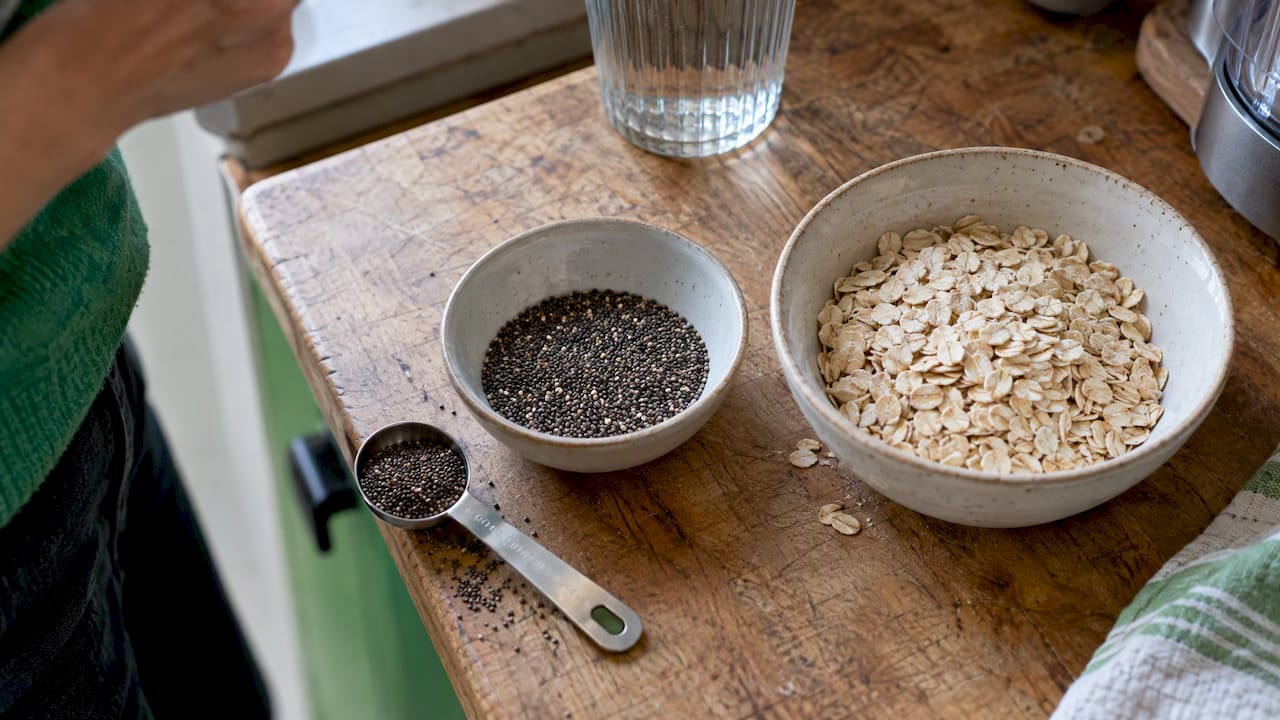
People on a restricted diet can fall short on fiber, and smoothies are a convenient place to fix that. Monash lists 2 tablespoons of chia seeds (24 g) as providing 8 g of fiber and half a cup of rolled oats (52 g) as providing 5 g, both as low FODMAP servings. Dr. Jane Varney of Monash points out that many high fiber foods are also high in FODMAPs, so choosing sources like chia or oats is a deliberate strategy rather than a coincidence.
6. Flavor
Vanilla extract, cocoa or cacao powder, cinnamon, fresh ginger and a squeeze of lime add flavor without adding fermentable carbohydrates. If you need sweetness, let a ripe-enough banana or a small amount of maple syrup do the work rather than honey or agave, which are higher in fructose.
Four low FODMAP smoothie recipes to start with
These are practical templates in the style of tested low FODMAP recipes. Where a Monash recipe exists, the quantities follow it. The others use the building blocks above, so treat portions as a starting point and confirm them in the Monash app.
Berry and banana breakfast smoothie
Monash’s Summer Berry Smoothie is a good model. It combines banana (one large ripe, or two to three slightly green), 20 to 30 blueberries, soy milk made from soy protein, vanilla yogurt (lactose free if needed) and lots of ice. The recipe makes four servings, so scale it down for one glass.
For a single serving, try:
- About 100 g slightly green banana
- 20 blueberries
- 1 cup lactose-free milk or unsweetened almond milk
- ½ cup lactose-free vanilla yogurt
- A handful of ice
Blend until smooth. It takes about five minutes and makes a gentle, bright breakfast.
Chocolate peanut butter smoothie
This one tastes like dessert and is hearty enough for a post-workout snack. The Monash recipe uses a 100 g slightly green banana, 2 tablespoons of peanut butter, ½ cup of unsweetened almond milk, lactose-free yogurt, cacao powder and vanilla essence. Note that it provides 519 calories per serving, so it works as a meal or a generous snack rather than a light drink. If you want a lighter version, reduce the peanut butter to 1 tablespoon and see how you feel.
Green smoothie
Monash also publishes a green smoothie recipe that follows the soy milk guidance above. At home, a simple version looks like this:
- 1 cup lactose-free milk
- 1 to 2 cups baby spinach
- A few slices of cucumber
- 1 tablespoon peanut butter
- A small portion of banana or kiwi
- Ice
Start with a smaller handful of greens if you’re new to green blends, and build up.
Oat and chia keeper
This is the one for mornings when you need to stay full until lunch.
- ½ cup rolled oats (52 g)
- 1 tablespoon chia seeds, increasing to 2 tablespoons if you tolerate it well
- 1 cup unsweetened almond milk or lactose-free milk
- 1 small slightly green banana or a measured portion of strawberries
- ½ teaspoon vanilla and a pinch of cinnamon
Blend, then let it sit for five minutes so the chia thickens. Oats and chia are the two fiber sources Monash highlights, as noted above. If you like the oat idea but prefer to prepare ahead, our overnight oats guide shows how to make grab-and-go jars; swap in lactose-free milk and a low FODMAP fruit topping.
Smoothie bowls and ready-made options
Thicker blends served in a bowl can feel more like a proper meal. Use less liquid, freeze your banana portion, and top with pumpkin seeds, sunflower seeds or a measured spoonful of gluten-free oats. Some prepared-meal companies sell low FODMAP smoothie bowls made with lactose-free yogurt, berries, maple syrup and seeds; one such listing shows a price of USD 25.06, which gives you a sense of what convenience costs compared with blending your own for a fraction of that.
Quick substitutions that keep a smoothie low FODMAP
| If your recipe calls for | Try instead |
|---|---|
| Regular milk or yogurt | Lactose-free milk or yogurt |
| Soy milk from whole soybeans | Soy milk made from soy protein |
| Apple juice or orange juice | Unsweetened almond milk or water |
| Honey or agave | A small amount of maple syrup, or ripeness from the banana |
| Mango, pear or apple | Measured blueberries, strawberries or kiwi |
| Protein powder with inulin or chicory root | A simple powder without added fibers, or yogurt and nut butter |
Making smoothies work in the bigger picture
Don’t stay on the strict phase forever
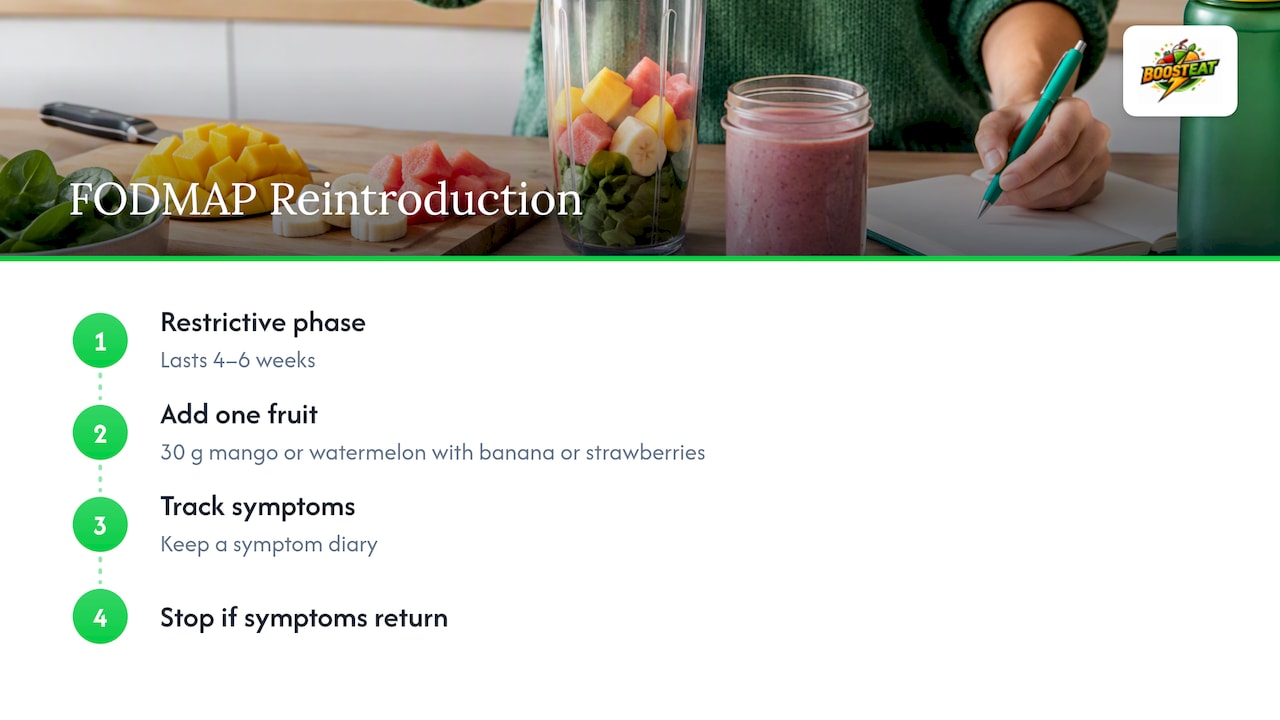
The low FODMAP diet isn’t meant to be permanent. Gastroenterology guidance describes the restrictive phase as lasting 4 to 6 weeks, followed by reintroducing FODMAP foods and building a long-term plan. The ACG guideline also warns that long-term over-restriction can lead to micronutrient deficiencies, which is why working with a registered dietitian is so valuable.
Smoothies are actually a friendly place to reintroduce foods. Monash suggests that during reintroduction you can add a small amount of a higher FODMAP fruit to a smoothie, for example 30 g of mango or watermelon alongside banana or strawberries. Add one food at a time, keep a symptom diary, and stop if symptoms return.
Aim for the most liberal diet you can tolerate
The goal, as Kate Scarlata describes in ACG’s magazine, is to eat as liberal a diet as possible while meeting nutrient needs, maintaining quality of life and managing symptoms. A smoothie that keeps you eating a variety of fruit, seeds and dairy alternatives serves that goal.
Practical tips for the blender
- Measure for the first few weeks. A kitchen scale and measuring spoons take the guesswork out. After a while you’ll eyeball portions with confidence.
- Sip, don’t gulp. Drinking a large smoothie quickly can cause discomfort for some people regardless of ingredients.
- Change one thing at a time. If a new recipe bothers you, you’ll know which ingredient to look at.
- Prep freezer packs. Portion banana, berries and spinach into bags on Sunday, add liquid and blend during the week.
- Keep a log. Note the ingredients, amounts and how you felt. It makes a dietitian visit far more productive.
If you also want something to snack on beside your smoothie, our no-bake energy balls are easy to adapt: check each ingredient, such as dates, honey and certain nut butters, against your FODMAP reference first.
Our perspective on smoothies and sensitive digestion
At Boost Eat we build recipes around wholesome ingredients, convenience and simplicity, and we know that a “healthy” recipe is only healthy for you if your body agrees with it. Readers often tell us they want quick breakfasts that fit a dietary restriction without turning mealtime into a project. For a low FODMAP blend, that means a short ingredient list, one measured fruit, a milk you’ve checked and a fiber source you trust.
We also think the most useful smoothie is the one you can repeat. Pick two or three combinations that sit well with you, prepare them in batches and rotate flavors with spices and extracts rather than with a long list of fruits. Treat your recipes as a reference sheet, and use professional guidance when your symptoms are persistent, severe or you’re unsure what to reintroduce.
— Simos – Boost-eat.com Founder
Get more recipes for your routine
If you like having a steady stream of ideas, Boost Eat Member’s Kitchen brings our recipes together for readers who want to cook and blend with less planning. It costs 7 EUR per month or 70 EUR per year.
You can see what Member’s Kitchen includes or browse the free recipes on the Boost Eat homepage first.
FAQ
Are smoothies safe for IBS?
They can be, if the ingredients suit your triggers. For people following a low FODMAP approach, that means measured low FODMAP fruit, lactose-free or suitable plant milk, and no high FODMAP add-ons such as certain juices, honey or inulin-based powders. Because triggers differ from person to person, a registered dietitian can help tailor a plan.
Can I have a low FODMAP smoothie for breakfast every day?
Yes, many people do, and it can be a reliable routine. Include protein and fiber, for example lactose-free yogurt, peanut butter, chia or oats, so it lasts until lunch. Vary your fruit within the low FODMAP list so you don’t eat the same thing every single day.
Which milk is best for a low FODMAP smoothie?
Lactose-free cow’s milk and unsweetened almond milk are common choices. If you prefer soy, look for a brand made from soy protein rather than whole soybeans, as Monash advises. Always check the label for added ingredients.
How long do I need to avoid high FODMAP foods?
The restrictive phase is typically 4 to 6 weeks, after which foods are reintroduced one at a time. The aim is a diet as varied as your symptoms allow, not permanent restriction.
Can I use frozen fruit?
Yes. Frozen fruit works well and makes the smoothie thick and cold without much ice. Measure your portion before freezing so every bag matches a serving size you’ve already checked.
Sources
- ACG Clinical Guideline: Management of Irritable Bowel Syndrome
- Low-FODMAP Diet, American College of Gastroenterology
- Green Smoothie Low FODMAP Recipe, Monash FODMAP
- Summer Berry Smoothie, Monash FODMAP
- Low FODMAP Choc Peanut Butter Smoothie, Monash FODMAP
- Getting Enough Fibre: Low FODMAP Foods and IBS, Monash FODMAP
- Low FODMAP Shopping List, Monash FODMAP
- Reintroducing Foods After the Restrictive Low FODMAP Phase, ACG
- How I Approach the Low FODMAP Diet, Kate Scarlata, ACG Magazine
- Smoothie Bowl product page
Recommended
- Top Vegetable Smoothie Tips: Recipes and Health Benefits
- Ultimate Guide to Perfect Overnight Oats Recipes
- Quick No-Bake Energy Balls Recipe: Healthy Snack Option
- Delicious Frozen Yogurt Bark: Easy Recipe & Tips
General Entertainment & Information Purposes Only. At Boost-Eat.com and our partners we share content for general entertainment and information. It’s not medical, dermatological, nutritional, or fitness advice and shouldn’t replace guidance from a licensed professional. If you’re making health-related decisions, please check with a qualified expert — and know that using this site and its information is at your own discretion.
Discover more from BOOST EAT
Subscribe to get the latest posts sent to your email.


